Greek Youvetsi is one of those timeless comfort foods that fills the kitchen with the irresistible aroma of slow-cooked beef, tomatoes, warm cinnamon, and oregano. As the beef gently braises, it becomes incredibly tender while the sauce develops layers of rich, savory flavor. The final addition of orzo transforms everything into a hearty, satisfying meal where every bite is coated in silky tomato sauce.
What makes this dish so special is how simple ingredients create something that tastes like it has been simmering in a family kitchen for generations. The subtle warmth from cinnamon and cloves gives the sauce its unmistakable Greek character without overpowering the beef, while a generous sprinkle of salty cheese melts beautifully into the finished casserole.
I’ve collected this recipe from traditional Greek home cooking and have made it several times for my own family. Everyone always goes back for seconds, especially with plenty of crusty bread to soak up the rich sauce. It’s also one of those meals that somehow tastes even better the next day.
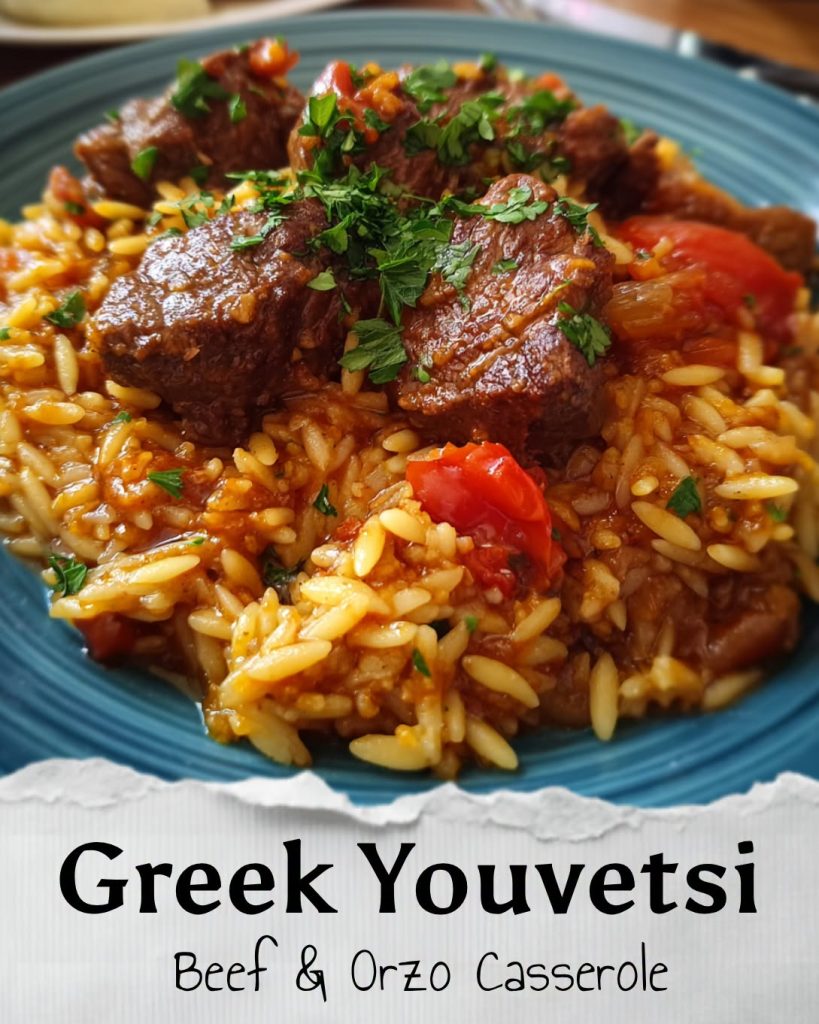
Although the cooking time is long, the hands-on work is surprisingly minimal. Most of the magic happens in the oven while the beef slowly becomes fork tender, making this an excellent choice for a relaxed weekend dinner or a special family gathering.
Love this recipe? Pin it to your Mediterranean Dinner Recipes board on Pinterest so you don’t lose it!
Why You’ll Love This Recipe
- One-Pot Simplicity: Everything cooks in a single Dutch oven, making cleanup easy while building incredible depth of flavor.
- Rich Mediterranean Flavor: Tomatoes, oregano, cinnamon, and garlic create the signature Greek sauce that perfectly complements slow-braised beef.
- Perfectly Tender Beef: Low, slow cooking transforms affordable beef chuck into melt-in-your-mouth pieces.
- Comforting Yet Elegant: It’s hearty enough for a cozy family dinner while impressive enough to serve guests.
- Excellent for Leftovers: The flavors continue to develop overnight, making tomorrow’s lunch or dinner even more delicious.
Key Ingredients & Why
- Beef Chuck: This well-marbled cut contains enough connective tissue to become exceptionally tender during slow braising while enriching the sauce with natural gelatin.
- Crushed Tomatoes and Tomato Puree: Using both creates a sauce with balanced texture, combining chunky tomato body with a smooth, concentrated finish.
- Red Wine Vinegar: Since this version omits wine, vinegar provides acidity that brightens the rich beef and enhances the tomato flavor without making the sauce sharp.
- Cinnamon Stick: A hallmark of traditional Greek meat sauces, it adds gentle warmth and aromatic complexity rather than sweetness.
- Orzo Pasta: This rice-shaped pasta absorbs the flavorful braising liquid while releasing a little starch, naturally thickening the finished casserole.
- Kefalotyri, Parmesan, or Pecorino: A hard, salty cheese finishes the dish with nutty richness and enhances the savory flavors without overwhelming them.
Variations & Substitutions
- Traditional Greek Cheese: Substitute Parmesan with kefalotyri or pecorino using a 1:1 ratio for a more authentic flavor profile.
- Ground Cinnamon: If a cinnamon stick is unavailable, replace it with ½ tsp ground cinnamon. Stir it directly into the sauce before braising.
- Brisket Instead of Chuck: Substitute beef brisket 1:1. Expect a similar cooking time, although thicker pieces may require an additional 20 to 30 minutes.
- Low-Sodium Version: Replace regular beef broth with low-sodium broth using a 1:1 ratio, then season the finished dish to taste.
- Fresh Herbs: Stir in 2 tbsp chopped fresh oregano or parsley at the end for a brighter finish without changing the dish’s traditional character.
Equipment Needed
- 6 to 7-quart Dutch Oven: Essential for browning, braising, and baking in one vessel. (Alternative: A heavy oven-safe stockpot with a tight-fitting lid.)
- Large Tongs: Makes it easier to brown and turn the beef without piercing it excessively.
- Box Grater: For freshly grating the finishing cheese. (Pre-grated cheese can be used but melts less smoothly.)
- Instant-Read Thermometer (Optional): Helpful for checking oven accuracy, especially during long braises.
- Important Warning: Do not use cookware with plastic handles unless it is specifically rated as oven safe through 325°F (160°C).
Yield & Exact Sizing
- Total Yield: Approximately 6 generous dinner servings.
- Beef Size: Cut beef into roughly 2-inch cubes (5 cm) before cooking for even braising.
- Finished Portion: Each serving contains about 2 to 3 beef pieces with approximately 1 cup of orzo and sauce.
- Cooking Shrinkage: The beef will shrink by approximately 20 to 25 percent during braising while becoming significantly more tender. The orzo expands considerably as it absorbs the flavorful broth.
Ingredients
For the Beef Stew Base:
2½ lb beef chuck or beef brisket, cut into 2-inch cubes
3 tbsp olive oil, divided
1 large onion, finely chopped
3 garlic cloves, minced
14 oz crushed tomatoes
14 oz tomato puree (passata)
1 cup beef broth
2 tbsp red wine vinegar
1 tsp sugar
1 tsp dried oregano
1 cinnamon stick
1 bay leaf
2 whole cloves (optional)
Salt, to taste
Freshly ground black pepper, to taste
For the Orzo:
1½ cups orzo pasta
2 cups hot beef broth or water
½ cup grated kefalotyri, Parmesan, or Pecorino cheese
For Serving:
Fresh parsley, chopped
Lemon wedges
Crusty bread
Instructions
- Pat the beef completely dry and brown it well. Heat 2 tbsp olive oil in a large Dutch oven over medium-high heat. Sear the beef in batches for 5 to 7 minutes per batch until deeply browned on every side. Transfer the browned beef to a plate.
- Cook the aromatics. Reduce the heat to medium and add the remaining 1 tbsp olive oil. Cook the chopped onion for 6 to 8 minutes until softened and lightly golden. Stir in the garlic and cook for 1 minute.
- Build the braising sauce. Add the crushed tomatoes, tomato puree, beef broth, red wine vinegar, sugar, oregano, cinnamon stick, bay leaf, cloves (if using), salt, and pepper. Stir well while scraping any browned bits from the bottom of the pot.
- Return the beef to the pot. Add any juices that collected on the plate. The liquid should nearly cover the meat. Add a splash of additional broth if necessary.
- Slow-braise the beef. Cover the Dutch oven and bake at 325°F (160°C) for 2 to 2½ hours, or until the beef is easily pierced with a fork. Alternatively, simmer gently on the stovetop over very low heat for the same amount of time.
- Prepare for the final bake. Remove the cinnamon stick, bay leaf, and cloves. Stir the orzo into the sauce along with the hot broth or water until evenly combined.
- Bake until the orzo is tender. Return the uncovered pot to the oven and bake for 20 to 25 minutes, stirring once halfway through so the pasta cooks evenly and doesn’t stick.
- Finish and serve. Sprinkle the grated cheese evenly over the hot casserole and allow it to melt for several minutes. Garnish with chopped parsley and serve immediately with lemon wedges and crusty bread alongside.
Visual & Tactile Cues
Browning the Beef
- The beef should release easily from the pot once a proper crust has formed. If it sticks firmly, give it another minute before turning.
- The browned pieces should be a deep mahogany color, not gray. Proper browning creates the foundation of the finished sauce.
Building the Sauce
- The tomato sauce should gently bubble rather than boil vigorously. A slow simmer helps the flavors blend without scorching.
- The aroma should shift from sharp tomato to warm garlic, oregano, and subtle cinnamon within a few minutes.
After Slow Braising
- The beef should pull apart effortlessly with a fork while still holding its shape.
- The sauce should appear glossy and slightly thickened, with small beads of olive oil naturally rising to the surface.
Cooking the Orzo
- Before baking, the mixture should look thinner than a finished pasta dish. The orzo will absorb a significant amount of liquid.
- Halfway through baking, stir gently to prevent the pasta from settling on the bottom.
Final Finish
- The orzo should be tender with a slight bite, never mushy.
- The cheese should melt smoothly into the surface, forming a lightly creamy finish instead of a thick crust.
Cooking Notes (Pro Tips)
- Brown in Small Batches: Crowding the pot traps steam and prevents caramelization. Taking a few extra minutes here produces a much richer finished dish.
- Keep the Braise Gentle: A low oven temperature allows the connective tissue in the beef to slowly break down without drying out the meat.
- Watch the Orzo Carefully: Different brands absorb liquid at different rates. If the mixture becomes dry before the pasta is tender, stir in an additional ¼ to ½ cup of hot broth.
- Rest Before Serving: Let the casserole sit for 5 to 10 minutes after removing it from the oven. The sauce will naturally thicken and coat the pasta more evenly.
Storage & Reheating Guide
- Refrigerator: Cool completely before transferring to an airtight container. Store for up to 4 days.
- Freezer: Freeze portions in freezer-safe containers for up to 3 months. Thaw overnight in the refrigerator before reheating.
- Best Reheating Method: Warm gently on the stovetop over medium-low heat with a splash of beef broth or water to loosen the sauce. Stir occasionally until heated through.
- Oven Reheating: Cover with foil and bake at 325°F (160°C) for about 20 minutes, adding a little broth if needed.
- Microwave: Suitable for convenience, but heat in short intervals and stir frequently. Add a spoonful of broth to keep the orzo from becoming dry.
Serving Suggestions
This hearty casserole is perfect for a cozy family dinner, a relaxed Sunday meal, or casual entertaining when you want something comforting that doesn’t require last-minute attention.
- Greek Village Salad (Horiatiki): Crisp cucumbers, tomatoes, olives, and feta provide fresh acidity that balances the rich braised beef.
- Crusty Rustic Bread: Ideal for soaking up every bit of the flavorful tomato sauce without requiring additional cooking.
- Sautéed Spinach or Horta: Lightly cooked greens add freshness and complement the warm Mediterranean spices.
- Roasted Lemon Potatoes: Their bright citrus flavor pairs naturally with the tomato-based sauce while creating a complete Greek-inspired meal.
Nutrition Facts
Estimated Nutrition per Serving
- Calories: 690 kcal
- Fat: 31 g
- Carbohydrates: 41 g
- Protein: 58 g
Disclaimer: This nutritional information is an estimate provided by an online calculator and is meant for informational purposes only.
Recipe Science
Greek Youvetsi is a traditional braised beef and pasta casserole that relies on slow cooking to transform inexpensive cuts of beef into tender, flavorful meat. Chuck or brisket contains abundant connective tissue, making these cuts ideal for long braising in a tomato-based sauce. The final addition of orzo allows the pasta to absorb the seasoned cooking liquid, creating a cohesive one-pot meal.
During the braise, collagen in the beef gradually converts into gelatin, producing a silky mouthfeel and naturally thickening the sauce. Browning the beef before simmering develops hundreds of aromatic compounds through the Maillard reaction, while tomatoes contribute acidity that balances the richness of the meat. Cinnamon, oregano, and cloves add characteristic Greek flavor through complementary aromatic compounds rather than sweetness.
The cooking method is practical for home kitchens because most of the preparation occurs at the beginning, followed by unattended oven cooking. Leftovers store well because the flavors continue to develop as the sauce rests, although the orzo may absorb additional moisture during refrigeration. Adding a small amount of broth while reheating restores the desired consistency.
One serving provides a substantial amount of protein while also containing moderate levels of saturated fat and sodium, depending on the broth and cheese used. These nutrients may exceed 20% of the FDA Daily Values for saturated fat or sodium in some preparations. Choosing reduced-sodium broth, using a lighter hand with the finishing cheese, and serving with a generous portion of vegetables can help balance the overall meal without significantly altering the traditional character of the dish.
Frequently Asked Questions
- Can I make Greek Youvetsi a day ahead? Yes. Braise the beef one day in advance, refrigerate it overnight, then add the orzo and complete the final bake just before serving.
- Can I use another type of pasta? Orzo produces the traditional texture. Small pasta shapes such as ditalini may work, but cooking time and liquid absorption will vary.
- Why is my orzo too thick after sitting? Orzo continues absorbing liquid as it rests. Stir in hot beef broth a few tablespoons at a time until the desired consistency returns.
- Can I cook this entirely on the stovetop? Yes. Braise the beef over very low heat, then cook the orzo gently while stirring more frequently to prevent sticking.
- What if I can’t find kefalotyri outside the United States? Parmesan or Pecorino Romano are excellent substitutes and are widely available internationally while still providing the salty, nutty finish typical of the dish.
- Can I prepare this for a dinner party? Absolutely. The beef can be braised ahead of time, allowing you to finish the orzo and cheese shortly before guests arrive for the freshest texture.
Conclusion
Greek Youvetsi is proof that simple ingredients, patience, and a little time can create an unforgettable meal. Whether you’re making it for a quiet family dinner or sharing it with friends, don’t be afraid to make it part of your own kitchen traditions.
I’d love to hear how you served yours. Did you pair it with a classic Greek salad, crusty bread, or another favorite side? Happy cooking, friend!
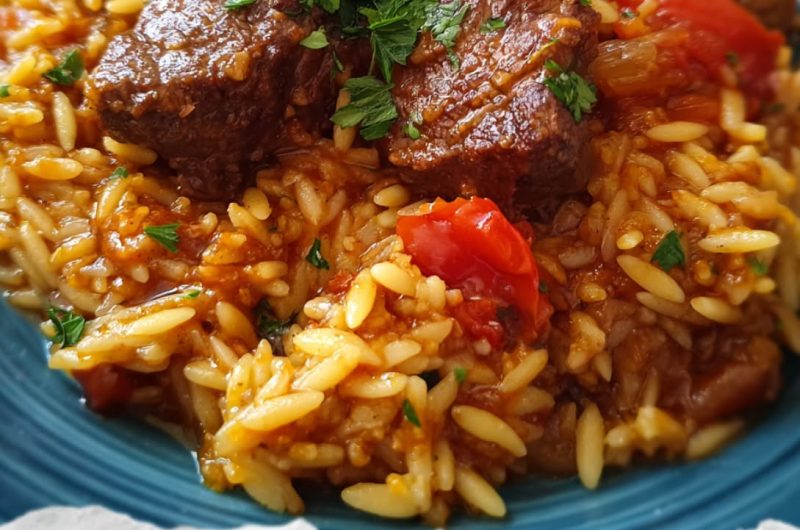
Greek Youvetsi (Beef & Orzo Casserole)
Course: Appetizers, Cooking TipsCuisine: Greek, MediterraneanDifficulty: Easy6
servings25
minutes2
hours45
minutes690
kcalGreek Youvetsi is a traditional one-pot meal featuring slow-braised beef in a richly spiced tomato sauce finished with tender orzo. The result is a comforting, deeply savory casserole with Mediterranean flavors that is well worth the slow cooking time.
Ingredients
- For the Beef Stew Base:
2½ lb beef chuck or beef brisket, cut into 2-inch cubes
3 tbsp olive oil, divided
1 large onion, finely chopped
3 garlic cloves, minced
14 oz crushed tomatoes
14 oz tomato puree (passata)
1 cup beef broth
2 tbsp red wine vinegar
1 tsp sugar
1 tsp dried oregano
1 cinnamon stick
1 bay leaf
2 whole cloves (optional)
Salt, to taste
Freshly ground black pepper, to taste
- For the Orzo:
1½ cups orzo pasta
2 cups hot beef broth or water
½ cup grated kefalotyri, Parmesan, or Pecorino cheese
- For Serving:
Fresh parsley, chopped
Lemon wedges
Crusty bread
Directions
- Pat the beef completely dry and brown it well. Heat 2 tbsp olive oil in a large Dutch oven over medium-high heat. Sear the beef in batches for 5 to 7 minutes per batch until deeply browned on every side. Transfer the browned beef to a plate.
- Cook the aromatics. Reduce the heat to medium and add the remaining 1 tbsp olive oil. Cook the chopped onion for 6 to 8 minutes until softened and lightly golden. Stir in the garlic and cook for 1 minute.
- Build the braising sauce. Add the crushed tomatoes, tomato puree, beef broth, red wine vinegar, sugar, oregano, cinnamon stick, bay leaf, cloves (if using), salt, and pepper. Stir well while scraping any browned bits from the bottom of the pot.
- Return the beef to the pot. Add any juices that collected on the plate. The liquid should nearly cover the meat. Add a splash of additional broth if necessary.
- Slow-braise the beef. Cover the Dutch oven and bake at 325°F (160°C) for 2 to 2½ hours, or until the beef is easily pierced with a fork. Alternatively, simmer gently on the stovetop over very low heat for the same amount of time.
- Prepare for the final bake. Remove the cinnamon stick, bay leaf, and cloves. Stir the orzo into the sauce along with the hot broth or water until evenly combined.
- Bake until the orzo is tender. Return the uncovered pot to the oven and bake for 20 to 25 minutes, stirring once halfway through so the pasta cooks evenly and doesn’t stick.
- Finish and serve. Sprinkle the grated cheese evenly over the hot casserole and allow it to melt for several minutes. Garnish with chopped parsley and serve immediately with lemon wedges and crusty bread alongside.