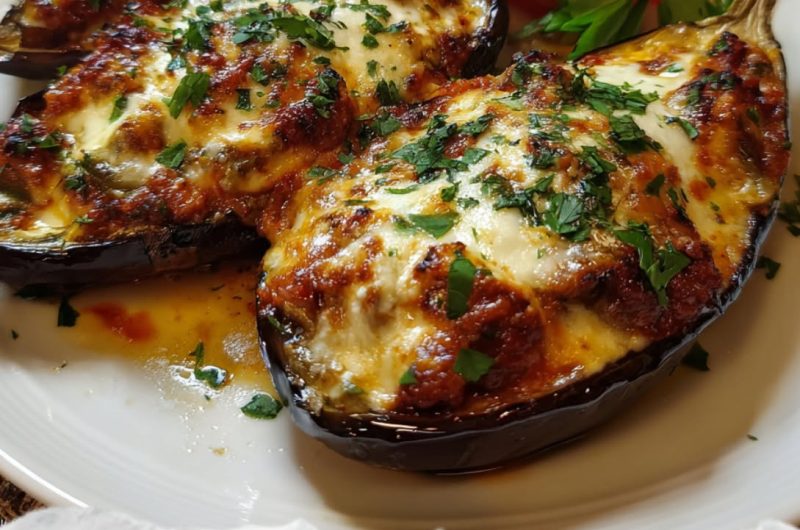
There are few dishes that capture the heart of traditional Greek home cooking quite like Papoutsakia. Named after the Greek word for “little shoes,” these roasted eggplants cradle a savory filling of seasoned ground beef, tomatoes, herbs, and warm spices before being finished with a luxurious layer of creamy béchamel and bubbling cheese. Every bite delivers a satisfying combination of tender eggplant, rich meat sauce, velvety topping, and crisp golden crust.
This is one of those recipes that fills the kitchen with an incredible aroma as it bakes. The hint of cinnamon and allspice adds warmth without overwhelming the savory flavors, while the roasted eggplant becomes silky and naturally sweet. The creamy béchamel balances the hearty filling, making every forkful rich but beautifully harmonious.
I’ve collected countless Mediterranean recipes over the years, but this one has become a favorite whenever family gathers around the table. Even people who normally aren’t enthusiastic about eggplant often find themselves asking for seconds because the flavors blend together so naturally. It feels special enough for guests yet comforting enough for a Sunday family dinner.
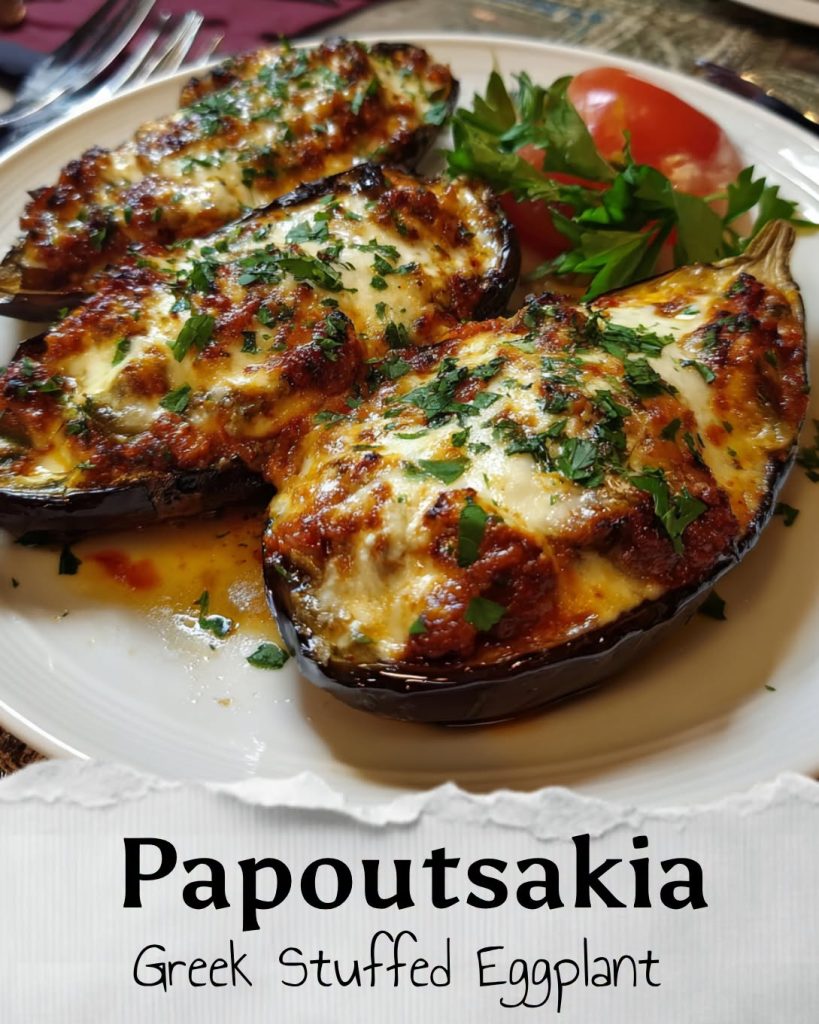
If you’re looking for a meal that celebrates authentic Greek flavors while rewarding your time with restaurant-quality results, this recipe deserves a permanent place in your collection. Love this recipe? Pin it to your Mediterranean Recipes board on Pinterest so you don’t lose it!
Why You’ll Love This Recipe
- Authentic Greek Flavor: Traditional Mediterranean herbs, tomatoes, cinnamon, and allspice create the signature flavor profile that makes Papoutsakia so memorable.
- Perfect Balance of Textures: Creamy béchamel, juicy beef filling, tender roasted eggplant, and a crisp golden cheese topping provide contrast in every bite.
- Ideal for Entertaining: The components can be prepared ahead of time, then assembled and baked just before serving.
- Comfort Food with Elegance: It’s hearty enough for a cozy family meal while looking impressive enough for holiday dinners or dinner parties.
- Excellent Leftovers: The flavors continue to develop overnight, making leftovers just as delicious, if not even better, the next day.
Key Ingredients & Why
- Eggplants: Roasting concentrates their natural sweetness while creating sturdy shells that hold the filling without falling apart. Their creamy interior absorbs the seasoned meat juices during baking.
- Ground Beef: Lean ground beef develops deep savory flavor as it browns while remaining tender after simmering with tomatoes. Using lean beef prevents the finished dish from becoming overly greasy.
- Crushed Tomatoes and Tomato Paste: The crushed tomatoes provide moisture and gentle acidity, while tomato paste intensifies the richness and creates a concentrated, slow-cooked flavor.
- Cinnamon and Allspice: These classic Greek seasonings add subtle warmth and complexity. Used in small amounts, they enhance the beef rather than making the dish taste sweet.
- Kefalotyri or Graviera Cheese: These traditional Greek cheeses offer a salty, nutty flavor and excellent browning qualities that create the signature golden crust. Parmesan makes an excellent alternative when Greek cheeses aren’t available.
- Béchamel Sauce: This classic French-style white sauce, enriched with egg yolk and grated cheese, creates the luxurious creamy topping that distinguishes Papoutsakia from many other stuffed vegetable dishes.
Variations & Substitutions
- Traditional Lamb Variation: Replace the ground beef with ground lamb using a 1:1 ratio for a richer, more traditional Greek flavor. Because lamb contains more fat, drain excess grease after browning if needed.
- Skip the Wine: Substitute the ½ cup dry red wine with an equal ½ cup beef broth (1:1). You’ll maintain the proper consistency while keeping the dish alcohol-free.
- Parmesan in Place of Greek Cheese: Use freshly grated Parmesan 1:1 if Kefalotyri or Graviera isn’t available. The flavor will be slightly different but still produces a beautifully browned crust.
- Fresh Herb Boost: Replace the dried oregano with 1 tablespoon fresh oregano (3:1 ratio) for a brighter herbal note. Add it during the final few minutes of simmering to preserve its flavor.
- Extra Vegetable Filling: Stir in 1 cup finely diced mushrooms with the onions to increase the vegetable content while keeping the overall texture and moisture balanced.
Equipment Needed
- Large Rimmed Baking Sheet or Baking Dish: Supports the eggplants during roasting and prevents juices from spilling. (Alternative: 9 x 13-inch baking dish.)
- Large Skillet or Sauté Pan: Provides enough surface area to brown the beef properly instead of steaming it. A crowded pan reduces flavor development.
- Medium Saucepan: Essential for preparing a smooth béchamel. (Alternative: Heavy-bottomed pot.) Stir constantly to prevent scorching.
- Whisk: Ensures the béchamel remains silky and lump-free. A fork is not an effective substitute.
- Rubber Spatula: Helps fold the egg yolk into the warm béchamel smoothly without scrambling it.
- Melon Baller or Large Spoon: Makes scooping the roasted eggplant flesh easier while leaving a sturdy shell. Do not scrape the shells too thin, or they may collapse during baking.
Yield & Exact Sizing
- Total Yield: 6 stuffed eggplant halves (6 main-course servings).
- Size & Shape: Each finished portion measures approximately 7 to 9 inches long and 2 to 3 inches wide, depending on the size of the eggplants.
- Filling Amount: Each eggplant half holds roughly ¾ to 1 cup of meat filling before being topped with about ⅓ cup of béchamel.
- Cooking Shrinkage: The beef filling reduces slightly as moisture evaporates during simmering, while the eggplants soften and settle during baking without significant loss of overall size.
Ingredients
For the Eggplants:
3 large eggplants
3 tbsp extra virgin olive oil
1 tsp sea salt
½ tsp freshly ground black pepper
For the Meat Filling:
1⅓ lb lean ground beef
2 tbsp extra virgin olive oil
1 large onion, finely chopped
3 garlic cloves, minced
14 oz crushed tomatoes
2 tbsp tomato paste
½ cup beef broth
⅓ cup dry red wine (or an additional ⅓ cup beef broth)
2 tbsp fresh parsley, chopped
1 tsp dried oregano
½ tsp ground cinnamon
¼ tsp ground allspice
1 tsp sea salt
½ tsp freshly ground black pepper
For the Béchamel Sauce:
3½ tbsp unsalted butter
⅓ cup all-purpose flour
2 cups whole milk, warmed
1 egg yolk
⅔ cup grated Kefalotyri or Parmesan cheese
Pinch freshly grated nutmeg
½ tsp sea salt
¼ tsp freshly ground white pepper
For the Topping:
1 cup grated Kefalotyri, Graviera, or Parmesan cheese
2 tbsp fresh parsley, chopped, for garnish
Instructions
- Preheat the oven to 375°F (190°C). Cut each eggplant in half lengthwise and score the flesh in a crisscross pattern, taking care not to cut through the skin. Brush the cut sides with olive oil, then season evenly with the salt and black pepper.
- Roast the eggplants cut side up on a baking sheet for 30 to 35 minutes, or until the flesh is tender. Remove from the oven and let them cool slightly. Scoop out most of the flesh, leaving about a ½-inch border to create sturdy shells. Roughly chop the scooped eggplant and set it aside for the filling.
- Cook the aromatics. Heat the olive oil in a large skillet over medium heat. Add the chopped onion and cook until softened and translucent, about 5 minutes. Stir in the garlic and cook for another minute until fragrant.
- Brown the beef. Add the ground beef to the skillet, breaking it into small pieces as it cooks. Continue cooking until no pink remains, then stir in the tomato paste and cook for 2 minutes to deepen its flavor.
- Build the filling. Add the crushed tomatoes, beef broth, red wine (if using), chopped roasted eggplant, parsley, oregano, cinnamon, allspice, salt, and black pepper. Stir well and simmer for 20 to 25 minutes, stirring occasionally, until the mixture is thick and most of the liquid has evaporated.
- Prepare the béchamel. Melt the butter in a medium saucepan over medium heat. Whisk in the flour and cook for about 2 minutes, stirring constantly to form a smooth roux. Slowly pour in the warm milk while whisking continuously until completely smooth.
- Finish the sauce. Continue cooking the béchamel for 5 to 7 minutes, whisking often, until it becomes thick and creamy. Remove the pan from the heat, then whisk in the egg yolk, grated cheese, nutmeg, salt, and white pepper until fully combined.
- Assemble the Papoutsakia. Arrange the roasted eggplant shells in a baking dish. Spoon the meat filling evenly into each shell, gently pressing it to remove large air pockets. Spread a generous layer of béchamel over each filled eggplant, completely covering the meat mixture.
- Add the cheese topping. Sprinkle the grated cheese evenly over the béchamel, covering each eggplant from edge to edge for an even golden crust.
- Bake until golden. Return the baking dish to the oven and bake for 25 to 30 minutes, or until the topping is deeply golden and the filling is bubbling around the edges.
- Rest and serve. Remove the Papoutsakia from the oven and let them rest for 10 minutes before serving. Garnish with chopped fresh parsley just before bringing them to the table.
Visual & Tactile Cues
While Roasting the Eggplants
- The eggplant flesh should feel very tender when pierced with a fork while the skins remain intact and sturdy.
- The edges should develop light caramelization without becoming dry or collapsed.
While Cooking the Meat Filling
- The onions should become soft and translucent without browning heavily.
- The beef should brown evenly with no visible pink remaining.
- The finished filling should be thick enough to hold its shape on a spoon, not watery or runny.
While Making the Béchamel
- The roux should smell lightly toasted without taking on any color.
- As the milk cooks, the sauce should become silky and coat the back of a spoon.
- After adding the egg yolk and cheese, the béchamel should be smooth, glossy, and spreadable without lumps.
During Assembly
- Each eggplant shell should remain firm enough to support the filling without tearing.
- The béchamel should spread easily into an even layer and completely cover the meat.
During the Final Bake
- The cheese should melt completely and develop deep golden-brown spots.
- Small bubbles around the edges indicate the filling is fully heated.
- The finished Papoutsakia should hold its shape when transferred while remaining creamy inside.
Cooking Notes (Pro Tips)
- Don’t Over-Scoop: Leave about a ½-inch layer of eggplant inside each shell. Removing too much flesh can cause the shells to collapse during baking.
- Reduce the Filling Properly: Simmer until most of the liquid has evaporated. A thick filling prevents watery eggplants and helps every serving hold together beautifully.
- Temper the Egg Yolk: Remove the béchamel from the heat before adding the egg yolk. This prevents it from scrambling and keeps the sauce silky smooth.
- Rest Before Serving: Allow the baked Papoutsakia to rest for at least 10 minutes. The filling will set slightly, making the portions easier to serve while staying exceptionally creamy.
Storage & Reheating Guide
- Refrigerator: Store cooled leftovers in an airtight container for up to 4 days.
- Freezer: Wrap individual portions tightly and freeze for up to 2 months. Thaw overnight in the refrigerator before reheating.
- Best Reheating Method: Warm in a 350°F (175°C) oven for 20 to 25 minutes, loosely covered with foil for the first half of the reheating time, then uncover to crisp the cheese topping.
- Microwave: Suitable for convenience, but the béchamel may soften and the cheese crust will lose its crisp texture. Use only if time is limited.
Serving Suggestions
Papoutsakia makes an outstanding centerpiece for a relaxed family dinner or a Mediterranean-inspired gathering. Pair it with fresh, bright sides that balance its rich, creamy flavors.
- Classic Greek Salad: Crisp cucumbers, tomatoes, olives, and feta provide refreshing acidity that complements the hearty filling.
- Warm Crusty Bread: A rustic loaf is perfect for soaking up the flavorful tomato sauce and creamy béchamel without requiring extra preparation.
- Lemon Herb Rice: Lightly seasoned rice with fresh herbs and lemon offers a simple, fresh side that won’t compete with the richness of the eggplant.
- Tzatziki Sauce: A cool yogurt, cucumber, and garlic sauce adds a refreshing contrast and enhances the Mediterranean flavors throughout the meal.
Nutrition Facts
Estimated Nutrition per Serving
- Calories: 590 kcal
- Fat: 34 g
- Carbohydrates: 25 g
- Protein: 42 g
Disclaimer: This nutritional information is an estimate provided by an online calculator and is meant for informational purposes only.
Recipe Science
Papoutsakia is a classic Greek baked dish that transforms simple ingredients into a layered, comforting meal. Roasted eggplant serves as the edible vessel for a savory filling of ground beef, tomatoes, herbs, and warm spices. A rich béchamel sauce topped with grated cheese finishes the dish, creating the signature golden crust that distinguishes Papoutsakia from other stuffed vegetable recipes.
Roasting the eggplants before filling them removes excess moisture while concentrating their natural sweetness. Browning the beef develops flavorful compounds through the Maillard reaction, creating a deeper, richer taste than simmering alone. Tomato paste intensifies the sauce with concentrated umami, while cinnamon and allspice contribute aromatic compounds that complement beef without making the dish taste sweet. The béchamel thickens because starch molecules in the flour absorb liquid and gelatinize as they cook, producing a smooth, stable sauce. The addition of egg yolk and cheese enriches the sauce further while promoting an evenly browned topping during baking.
Preparing the filling and sauce separately gives home cooks better control over texture and moisture. Simmering the meat mixture until thick prevents excess liquid from collecting inside the eggplant shells, while allowing the finished dish to rest after baking gives the filling and béchamel time to set for cleaner servings. Leftovers also benefit from refrigeration because the flavors continue to meld overnight. Reheating in the oven restores much of the crisp cheese topping while warming the filling evenly.
One serving provides a substantial amount of protein, making Papoutsakia a satisfying main course. Depending on the cheese used, the recipe may contribute more than 20% of the FDA Daily Value for saturated fat (20 g/day) and sodium (2,300 mg/day) per serving. To reduce these values, cooks can choose leaner ground beef, reduce the added cheese slightly, or use lower-sodium beef broth while maintaining the traditional character of the dish.
Frequently Asked Questions
- Can I make Papoutsakia ahead of time? Yes. Prepare the eggplants, meat filling, and béchamel up to one day in advance. Assemble everything, refrigerate, and bake just before serving.
- Can I freeze the finished dish? Yes. Allow the baked Papoutsakia to cool completely, wrap each portion tightly, and freeze for up to 2 months. Thaw overnight in the refrigerator before reheating in the oven.
- Why is my filling watery? The meat mixture likely wasn’t simmered long enough. Continue cooking until nearly all excess liquid has evaporated before filling the eggplants.
- How do I keep the eggplant shells from collapsing? Leave about a ½-inch border of flesh when scooping out the roasted eggplants. This creates a sturdy shell that supports the filling during baking.
- Can I use ground lamb instead of beef? Absolutely. Ground lamb is a traditional variation and can be substituted using a 1:1 ratio. Drain excess fat after browning if necessary.
- What if I can’t find Kefalotyri or Graviera cheese? Freshly grated Parmesan is the easiest and most widely available substitute. Pecorino Romano also provides a pleasantly salty finish, though it has a sharper flavor.
- Can I prepare the béchamel in advance? Yes. Cool it with plastic wrap pressed directly onto the surface to prevent a skin from forming. Rewarm gently while stirring before assembling the dish.
- How can I recreate authentic Greek flavor outside the United States? Look for Greek oregano, good-quality extra virgin olive oil, and imported Greek cheeses at Mediterranean markets. If Greek cheeses aren’t available, use freshly grated Parmesan rather than pre-shredded cheese for the closest texture and flavor.
Conclusion
Papoutsakia is one of those timeless recipes that proves a little extra care in the kitchen can create something truly memorable. From the tender roasted eggplant to the rich, aromatic beef filling and creamy golden béchamel, every layer brings authentic Greek comfort to the table.
Don’t be afraid to make this recipe your own while respecting its traditional roots. I’d love to hear how yours turned out. Did you use beef or lamb, and what did you serve alongside it?
Happy cooking, friend!
Papoutsakia
Course: Dinner, Main CourseCuisine: GreekDifficulty: Medium6
servings30
minutes1
hour5
minutes590
kcalPapoutsakia is a beloved Greek comfort food featuring roasted eggplant halves filled with a richly seasoned beef and tomato mixture, topped with silky béchamel sauce and a golden layer of cheese. Although it takes a little time to prepare, every step builds incredible flavor that’s well worth the effort.
Ingredients
- For the Eggplants:
3 large eggplants
3 tbsp extra virgin olive oil
1 tsp sea salt
½ tsp freshly ground black pepper
- For the Meat Filling:
1⅓ lb lean ground beef
2 tbsp extra virgin olive oil
1 large onion, finely chopped
3 garlic cloves, minced
14 oz crushed tomatoes
2 tbsp tomato paste
½ cup beef broth
⅓ cup dry red wine (or an additional ⅓ cup beef broth)
2 tbsp fresh parsley, chopped
1 tsp dried oregano
½ tsp ground cinnamon
¼ tsp ground allspice
1 tsp sea salt
½ tsp freshly ground black pepper
- For the Béchamel Sauce:
3½ tbsp unsalted butter
⅓ cup all-purpose flour
2 cups whole milk, warmed
1 egg yolk
⅔ cup grated Kefalotyri or Parmesan cheese
Pinch freshly grated nutmeg
½ tsp sea salt
¼ tsp freshly ground white pepper
- For the Topping:
1 cup grated Kefalotyri, Graviera, or Parmesan cheese
2 tbsp fresh parsley, chopped, for garnish
Directions
- Preheat the oven to 375°F (190°C). Cut each eggplant in half lengthwise and score the flesh in a crisscross pattern, taking care not to cut through the skin. Brush the cut sides with olive oil, then season evenly with the salt and black pepper.
- Roast the eggplants cut side up on a baking sheet for 30 to 35 minutes, or until the flesh is tender. Remove from the oven and let them cool slightly. Scoop out most of the flesh, leaving about a ½-inch border to create sturdy shells. Roughly chop the scooped eggplant and set it aside for the filling.
- Cook the aromatics. Heat the olive oil in a large skillet over medium heat. Add the chopped onion and cook until softened and translucent, about 5 minutes. Stir in the garlic and cook for another minute until fragrant.
- Brown the beef. Add the ground beef to the skillet, breaking it into small pieces as it cooks. Continue cooking until no pink remains, then stir in the tomato paste and cook for 2 minutes to deepen its flavor.
- Build the filling. Add the crushed tomatoes, beef broth, red wine (if using), chopped roasted eggplant, parsley, oregano, cinnamon, allspice, salt, and black pepper. Stir well and simmer for 20 to 25 minutes, stirring occasionally, until the mixture is thick and most of the liquid has evaporated.
- Prepare the béchamel. Melt the butter in a medium saucepan over medium heat. Whisk in the flour and cook for about 2 minutes, stirring constantly to form a smooth roux. Slowly pour in the warm milk while whisking continuously until completely smooth.
- Finish the sauce. Continue cooking the béchamel for 5 to 7 minutes, whisking often, until it becomes thick and creamy. Remove the pan from the heat, then whisk in the egg yolk, grated cheese, nutmeg, salt, and white pepper until fully combined.
- Assemble the Papoutsakia. Arrange the roasted eggplant shells in a baking dish. Spoon the meat filling evenly into each shell, gently pressing it to remove large air pockets. Spread a generous layer of béchamel over each filled eggplant, completely covering the meat mixture.
- Add the cheese topping. Sprinkle the grated cheese evenly over the béchamel, covering each eggplant from edge to edge for an even golden crust.
- Bake until golden. Return the baking dish to the oven and bake for 25 to 30 minutes, or until the topping is deeply golden and the filling is bubbling around the edges.
- Rest and serve. Remove the Papoutsakia from the oven and let them rest for 10 minutes before serving. Garnish with chopped fresh parsley just before bringing them to the table.