There is something incredibly satisfying about a pot of slow-braised octopus simmering in a fragrant tomato sauce. As the octopus gently cooks, it becomes remarkably tender while the sauce develops layers of savory sweetness, gentle acidity, and aromatic herbs. The result is a meal that feels elegant enough for a special occasion but is approachable enough for a weekend family dinner.
One of the things I appreciate most about this version is that it remains true to the spirit of traditional Xtapodi Krasato while replacing the wine with red wine vinegar, making it alcohol-free without sacrificing the dish’s signature depth. The vinegar adds brightness that balances the naturally sweet tomatoes and complements the rich seafood beautifully.
After testing this recipe at home, I found that patience is the real secret ingredient. Giving the octopus plenty of time to slowly braise transforms its texture from firm to buttery tender. My family especially enjoyed serving generous spoonfuls of the rich sauce over warm crusty bread, making sure not a single drop went to waste.
Although octopus may seem intimidating if you’ve never cooked it before, the process is surprisingly straightforward. A handful of pantry staples, a heavy pot, and gentle heat do most of the work for you. The finished dish tastes as though it came from a seaside Greek taverna, filling the kitchen with the comforting aromas of tomatoes, garlic, oregano, and olive oil.
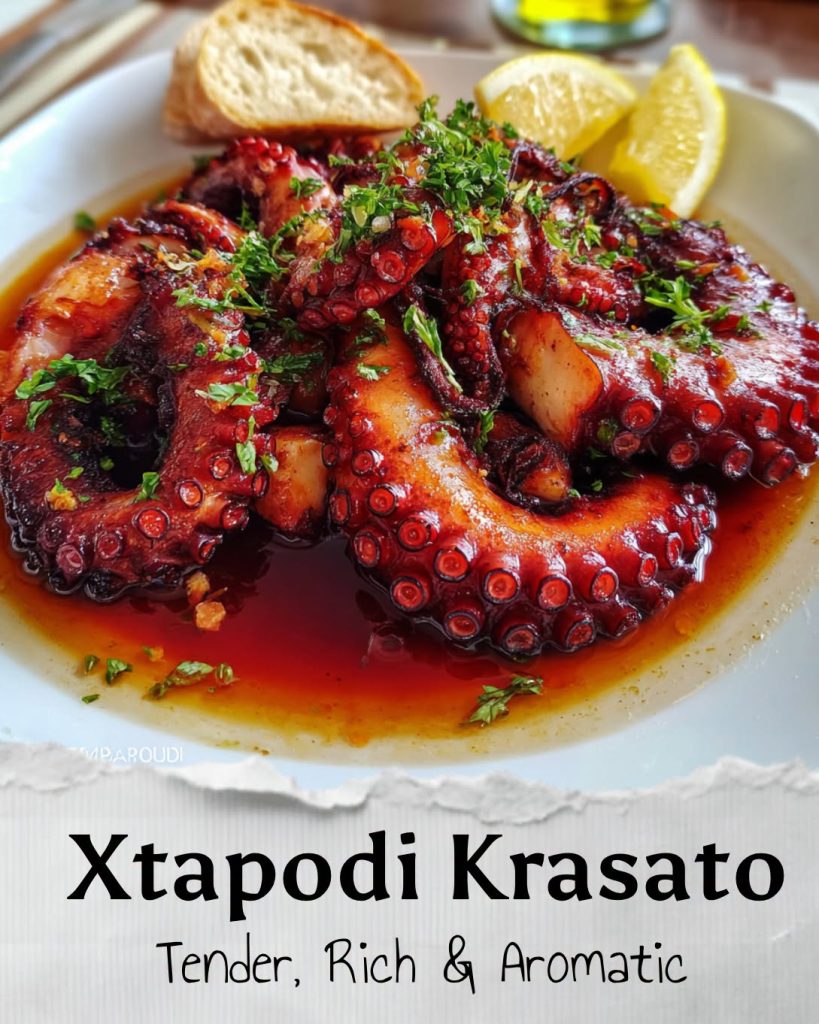
Love this recipe? Pin it to your Mediterranean Dinner Recipes board on Pinterest so you don’t lose it!
Why You’ll Love This Recipe
- Rich Mediterranean Flavor: Slow braising creates a deeply savory tomato sauce with balanced acidity, fragrant herbs, and naturally sweet onions.
- Beautifully Tender Seafood: Gentle cooking transforms octopus into tender, juicy pieces without becoming rubbery.
- Naturally Gluten-Free: Every ingredient is naturally gluten-free, making this recipe suitable for many dietary preferences without special substitutions.
- Perfect for Entertaining: Most of the cooking is hands-off, allowing you to prepare side dishes or simply relax while the sauce simmers.
- Restaurant-Quality at Home: With simple ingredients and careful cooking, you can recreate a classic Greek seafood dish in your own kitchen.
Key Ingredients & Why
- Octopus: The star of the dish. Slow, moist cooking breaks down connective tissue, producing a tender texture while allowing the seafood to absorb the rich tomato sauce.
- Red Wine Vinegar: Used in place of wine, it provides acidity that balances the sweetness of the tomatoes while adding complexity similar to traditional Xtapodi Krasato.
- Crushed Tomatoes and Tomato Puree: Using both creates a sauce with layered texture. Crushed tomatoes provide body, while tomato puree gives the sauce a silky consistency.
- Olive Oil: Extra virgin olive oil forms the flavorful base of the sauce and helps carry the aromatic compounds from the garlic, onion, and herbs.
- Dried Oregano: A signature Greek herb that contributes earthy, slightly peppery notes which complement both seafood and tomatoes.
- Cinnamon Stick: Although optional, it adds subtle warmth and aromatic complexity without making the dish taste sweet.
Variations & Substitutions
- Use Fish Stock: Replace the vegetable broth with fish stock using a 1:1 ratio for an even deeper seafood flavor.
- Skip the Cinnamon: Omit the cinnamon stick completely if you prefer a brighter, more herb-forward sauce. No other adjustments are necessary.
- Add Kalamata Olives: Stir in ½ cup sliced Kalamata olives during the last 10 minutes of cooking for extra Mediterranean character.
- Fresh Oregano Option: Substitute 1 tbsp fresh oregano for 1 tsp dried oregano. Add it during the final 15 minutes to preserve its fresh flavor.
- Spicy Finish: Add ¼ tsp crushed red pepper flakes with the garlic for a gentle heat that complements the tomato sauce without overpowering the octopus.
Equipment Needed
- Large Dutch Oven or Heavy-Bottomed Pot: Essential for even heat distribution during the long simmer. (Alternative: heavy stockpot.) Thin pots may scorch the sauce.
- Meat Mallet or Rolling Pin: Helps tenderize thicker portions of the octopus before cooking. (Alternative: the flat side of a sturdy skillet.)
- Tongs: Makes turning and removing the octopus much easier without tearing the meat.
- Instant-Read Thermometer (Optional): Useful for monitoring simmer temperature, although maintaining a gentle simmer visually is usually sufficient.
- Large Cutting Board: Provides a stable surface for slicing the cooked octopus evenly before serving.
Yield & Exact Sizing
- Total Yield: Approximately 6 main-course servings, producing about 2 to 2½ pounds of cooked octopus with generous tomato sauce.
- Size & Shape: Slice the cooked octopus into pieces about ½ inch (1.5 cm) thick for serving. Tentacles may be left whole if preferred.
- Cooking Shrinkage: Expect the octopus to shrink by approximately 20 to 30% during cooking as moisture is released.
Ingredients
For the Octopus:
3 lb octopus, fresh or frozen, thawed if frozen
2 tbsp red wine vinegar
Salt, optional, for cleaning
For the Sauce:
¼ cup olive oil
1 large onion, finely chopped
3 cloves garlic, minced
14 oz crushed tomatoes
14 oz tomato puree or passata
½ cup vegetable broth, fish broth, or water
¼ cup red wine vinegar
1 tsp sugar
1 tsp dried oregano
1 bay leaf
1 cinnamon stick (optional)
Salt, to taste
Freshly ground black pepper, to taste
For Serving:
¼ cup fresh parsley, chopped
Lemon wedges
Crusty bread, cooked rice, or cooked pasta
Instructions
- Prepare the octopus. If using frozen octopus, thaw it overnight in the refrigerator. Rinse thoroughly under cold water and pat dry. Gently pound the thickest portions with a meat mallet or rolling pin for 1 to 2 minutes to help tenderize the meat.
- Brown the octopus. Heat the olive oil in a large Dutch oven over medium-high heat. Add the octopus and cook for 5 to 7 minutes, turning occasionally until it releases liquid and begins to lightly brown.
- Cook the onion. Transfer the octopus to a plate. Reduce the heat to medium, add the chopped onion, and cook for 6 to 8 minutes until softened and translucent.
- Add the garlic. Stir in the minced garlic and cook for about 1 minute, stirring constantly until fragrant.
- Build the sauce. Add the crushed tomatoes, tomato puree, broth, red wine vinegar, sugar, oregano, bay leaf, cinnamon stick (if using), salt, and pepper. Stir well while scraping any browned bits from the bottom of the pot. Bring the mixture to a gentle simmer.
- Return the octopus. Nestle the octopus back into the sauce. The liquid should come about halfway up the octopus. Add a little more broth if necessary.
- Slow braise. Cover and cook over very low heat for 45 to 60 minutes, or until the octopus is tender. Larger octopus may require up to 1½ hours. Alternatively, transfer the covered Dutch oven to a 325°F (160°C) oven and cook for approximately 1 hour.
- Rest and slice. Remove the bay leaf and cinnamon stick. Let the octopus rest in the sauce for 10 minutes before transferring it to a cutting board. Slice into ½-inch pieces.
- Serve. Arrange the sliced octopus on a serving platter, spoon the rich tomato sauce generously over the top, garnish with chopped parsley, and serve immediately with lemon wedges and your favorite accompaniment.
Visual & Tactile Cues
While Preparing the Octopus
- The octopus should feel firm and slightly springy after rinsing. After gently pounding the thicker sections, it should still hold its shape but feel a little more flexible.
- Pat the octopus completely dry before browning. A dry surface encourages caramelization instead of steaming.
While Browning
- As the octopus cooks, it will release a surprising amount of liquid before beginning to brown.
- The edges should develop light golden spots, and the kitchen should smell pleasantly briny with hints of olive oil.
- Avoid cooking until dark brown, as excessive browning can toughen the exterior before the slow braise.
While Cooking the Sauce
- The onions should become soft and translucent without taking on much color.
- After adding the tomatoes, the sauce should gently bubble rather than boil vigorously.
- The sauce should smell sweet, savory, and aromatic, with the oregano and garlic becoming more pronounced as it simmers.
During Braising
- The sauce should maintain a slow, gentle simmer with only occasional bubbles breaking the surface.
- As cooking progresses, the sauce will thicken noticeably and coat the back of a spoon.
- The octopus is ready when the thickest section can be pierced easily with a knife or skewer, offering little resistance.
Before Serving
- After resting for 10 minutes, the octopus should slice cleanly without falling apart.
- The finished sauce should be rich, glossy, and cling beautifully to each slice of octopus.
Cooking Notes (Pro Tips)
- Don’t Rush the Simmer: High heat will tighten the muscle fibers and make the octopus chewy. A slow, gentle braise is the key to tenderness.
- Brown Before Braising: Allowing the octopus to lightly brown first develops savory flavor that carries throughout the finished sauce.
- Taste Near the End: Tomatoes and vinegar become sweeter as they cook. Adjust the salt only during the final 10 minutes to avoid over-seasoning.
- Rest Before Slicing: Letting the octopus rest in the hot sauce for 10 minutes helps the juices redistribute and allows the flavors to settle.
Storage & Reheating Guide
- Refrigerator: Store cooled leftovers in an airtight container with plenty of sauce for up to 3 days.
- Freezer: Freeze in freezer-safe containers for up to 2 months. Thaw overnight in the refrigerator before reheating.
- Best Reheating Method: Warm gently in a covered saucepan over low heat, adding a splash of broth or water if the sauce has thickened too much.
- Microwave: Microwave only if necessary, using 50% power in short intervals. Overheating can make octopus firm and rubbery.
- Avoid Boiling: Never bring leftovers to a vigorous boil, as prolonged high heat can negatively affect the texture.
Serving Suggestions
This hearty Mediterranean seafood dish is perfect for a relaxed weekend dinner, a special family gathering, or a leisurely meal shared with friends.
- Crusty Artisan Bread: The crisp crust and chewy interior are ideal for soaking up every spoonful of the rich tomato sauce.
- Greek Rice Pilaf: Mild, fluffy rice balances the bold tomato flavors while absorbing the savory cooking juices.
- Simple Greek Salad: Fresh cucumber, tomatoes, olives, feta, and a lemony vinaigrette provide a cool, crisp contrast to the warm braised octopus.
- Roasted Lemon Potatoes: Their bright citrus flavor and crispy edges complement the richness of the sauce without requiring additional stovetop cooking.
Nutrition Facts
Estimated Nutrition per Serving
- Calories: 365 kcal
- Fat: 16 g
- Carbohydrates: 15 g
- Protein: 38 g
Disclaimer: This nutritional information is an estimate provided by an online calculator and is meant for informational purposes only.
Recipe Science
Slow braising is one of the most effective methods for cooking octopus because it gradually softens the collagen-rich connective tissue without drying out the lean meat. In this recipe, the octopus cooks gently in a tomato-based sauce flavored with olive oil, garlic, onion, oregano, and red wine vinegar, producing tender seafood and a deeply savory sauce.
Tomatoes provide natural glutamates that enhance savory flavor, while the acidity from the red wine vinegar helps balance sweetness and brightens the overall dish. Olive oil dissolves and carries many of the aromatic compounds from garlic and oregano, allowing their flavors to disperse evenly throughout the sauce. Gentle simmering minimizes moisture loss while encouraging the collagen to convert into gelatin, creating the octopus’s characteristic tender texture.
This cooking method is practical because most of the preparation happens early, leaving the braising process largely unattended. The finished dish also stores well because the flavors continue to meld as it cools. When reheating, gentle heat helps preserve the delicate texture that slow cooking created. Rapid boiling, on the other hand, can cause the proteins to tighten again.
One serving provides a substantial amount of protein while remaining relatively moderate in carbohydrates. Depending on the amount of salt and broth used, sodium may approach or exceed 20% of the FDA Daily Value (2,300 mg). Saturated fat generally remains below 20% of the Daily Value (20 g), and added sugars are well below the FDA Daily Value (50 g). Reducing added salt or choosing a low-sodium broth can lower the sodium content without significantly changing the flavor.
Frequently Asked Questions
- Can I use frozen octopus? Yes. Frozen octopus is an excellent choice because freezing naturally helps break down muscle fibers, often producing a more tender result after thawing.
- How do I know when the octopus is fully cooked? Insert a thin knife into the thickest section. It should slide in easily with very little resistance.
- Can I make this recipe ahead of time? Absolutely. Many cooks find the flavor is even better the next day after the sauce has had time to develop.
- Can I cook this in the oven instead of on the stovetop? Yes. Cover the Dutch oven and bake at 325°F (160°C) until the octopus becomes tender.
- What can I use if I can’t find passata? Tomato puree or a smooth canned tomato sauce without added seasonings works well in an equal 1:1 amount.
- I live outside the United States. What type of octopus should I buy? Fresh or frozen Mediterranean, Atlantic, or Pacific octopus all work well. Ask your local fishmonger for a cleaned whole octopus weighing about 2½ to 3 pounds, or choose frozen octopus from a reputable seafood supplier.
Conclusion
Few dishes capture the warmth of Mediterranean home cooking quite like this slow-braised Greek octopus. With a little patience, you’ll be rewarded with incredibly tender seafood and a rich tomato sauce that’s worthy of every last piece of bread on the table.
Don’t be afraid to make this recipe your own while keeping its classic Greek character at the heart of the dish. I’d love to hear how you served it. Did you pair it with crusty bread, rice, or something entirely different?
Happy cooking, friend!
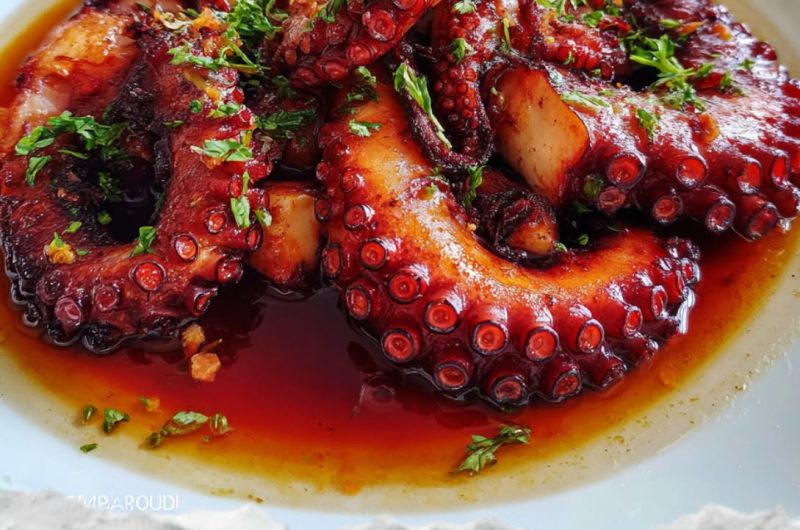
Xtapodi Krasato
Course: Dinner, Main CourseCuisine: MediterraneanDifficulty: Medium6
servings20
minutes1
hour15
minutes365
kcalTender octopus is slowly braised in a rich tomato sauce infused with garlic, onion, oregano, and red wine vinegar for depth instead of wine. This comforting Greek classic delivers bold Mediterranean flavors with surprisingly simple preparation.
Ingredients
- For the Octopus:
3 lb octopus, fresh or frozen, thawed if frozen
2 tbsp red wine vinegar
Salt, optional, for cleaning
- For the Sauce:
¼ cup olive oil
1 large onion, finely chopped
3 cloves garlic, minced
14 oz crushed tomatoes
14 oz tomato puree or passata
½ cup vegetable broth, fish broth, or water
¼ cup red wine vinegar
1 tsp sugar
1 tsp dried oregano
1 bay leaf
1 cinnamon stick (optional)
Salt, to taste
Freshly ground black pepper, to taste
- For Serving:
¼ cup fresh parsley, chopped
Lemon wedges
Crusty bread, cooked rice, or cooked pasta
Directions
- Prepare the octopus. If using frozen octopus, thaw it overnight in the refrigerator. Rinse thoroughly under cold water and pat dry. Gently pound the thickest portions with a meat mallet or rolling pin for 1 to 2 minutes to help tenderize the meat.
- Brown the octopus. Heat the olive oil in a large Dutch oven over medium-high heat. Add the octopus and cook for 5 to 7 minutes, turning occasionally until it releases liquid and begins to lightly brown.
- Cook the onion. Transfer the octopus to a plate. Reduce the heat to medium, add the chopped onion, and cook for 6 to 8 minutes until softened and translucent.
- Add the garlic. Stir in the minced garlic and cook for about 1 minute, stirring constantly until fragrant.
- Build the sauce. Add the crushed tomatoes, tomato puree, broth, red wine vinegar, sugar, oregano, bay leaf, cinnamon stick (if using), salt, and pepper. Stir well while scraping any browned bits from the bottom of the pot. Bring the mixture to a gentle simmer.
- Return the octopus. Nestle the octopus back into the sauce. The liquid should come about halfway up the octopus. Add a little more broth if necessary.
- Slow braise. Cover and cook over very low heat for 45 to 60 minutes, or until the octopus is tender. Larger octopus may require up to 1½ hours. Alternatively, transfer the covered Dutch oven to a 325°F (160°C) oven and cook for approximately 1 hour.
- Rest and slice. Remove the bay leaf and cinnamon stick. Let the octopus rest in the sauce for 10 minutes before transferring it to a cutting board. Slice into ½-inch pieces.
- Serve. Arrange the sliced octopus on a serving platter, spoon the rich tomato sauce generously over the top, garnish with chopped parsley, and serve immediately with lemon wedges and your favorite accompaniment.