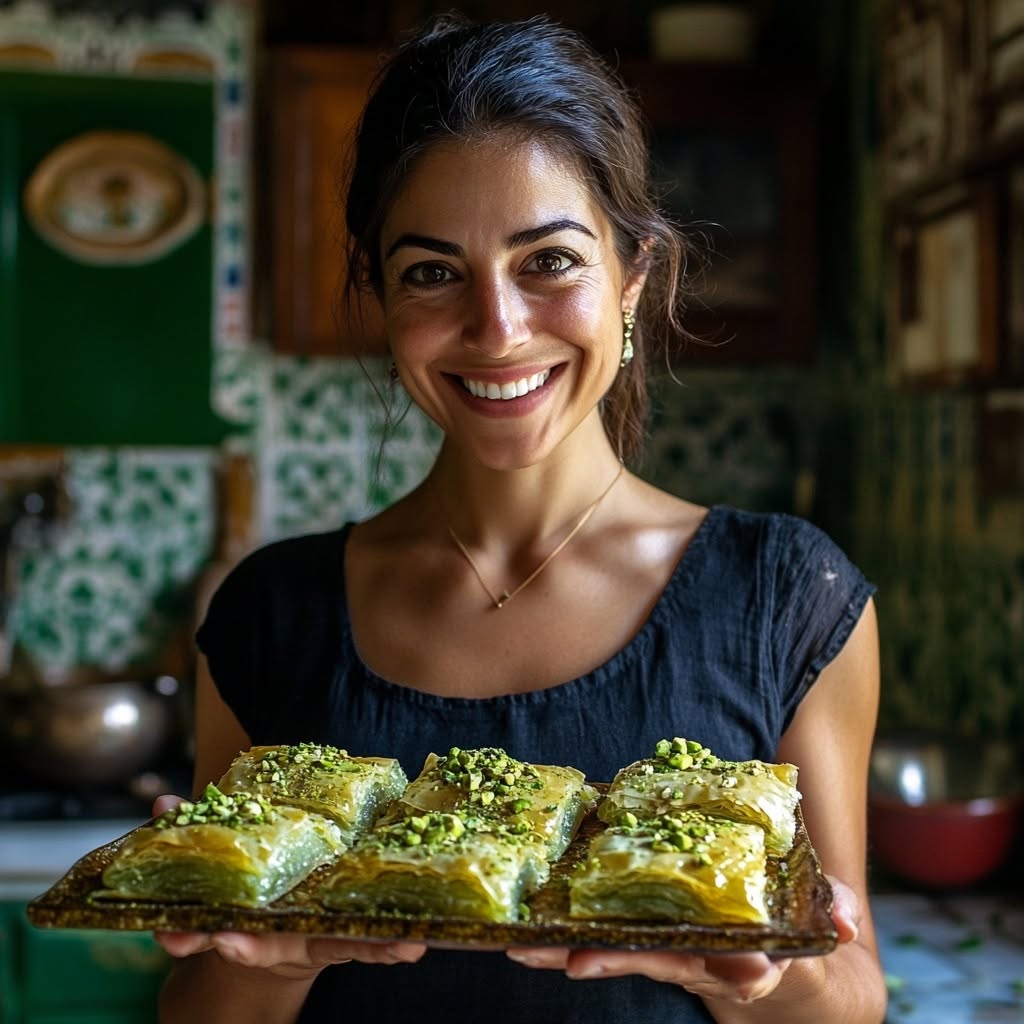
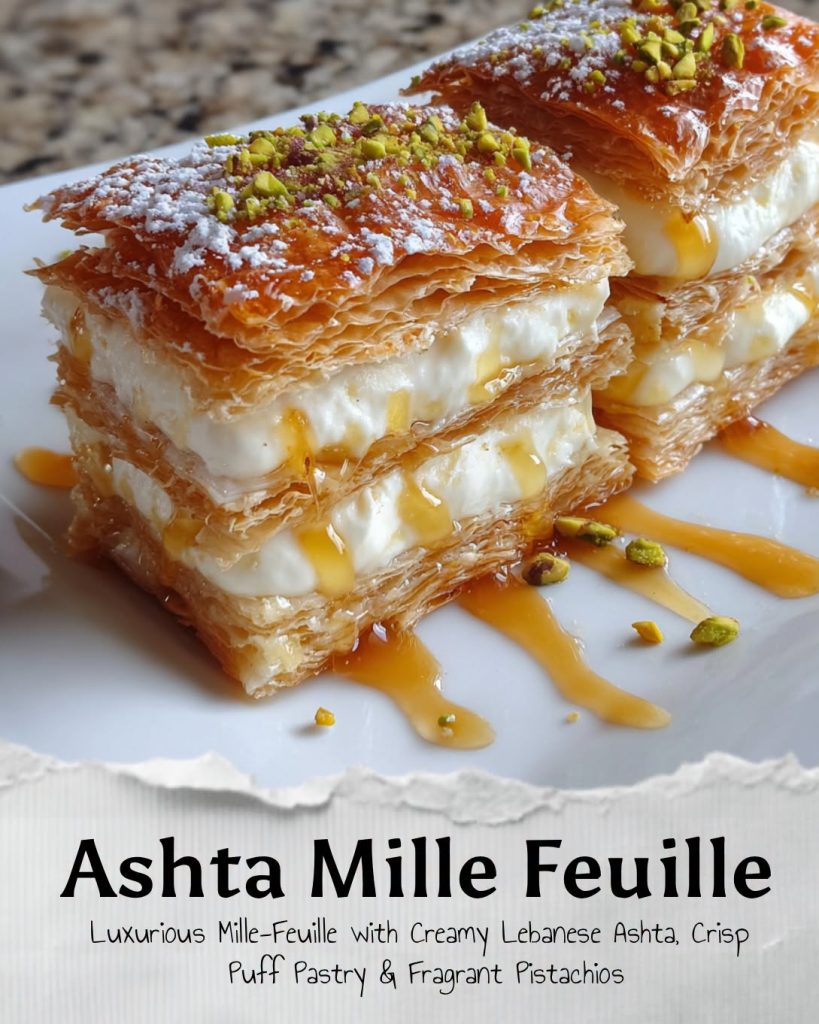
This Ashta Mille-Feuille brings together two wonderful pastry traditions: shatteringly crisp puff pastry and the fragrant milk cream found in many Lebanese and Middle Eastern sweets. Each forkful gives you buttery pastry, cool vanilla-scented cream, floral orange blossom and rose notes, and the gentle crunch of roasted pistachios.
The ashta here is a practical home-kitchen version thickened with cornstarch. Whole milk and heavy cream keep it creamy without making it excessively heavy, while a small amount of mascarpone can be folded in for an even richer finish. I especially like that the cream can be prepared ahead and chilled until assembly time.
The pastry needs a little attention because keeping it flat is what creates neat mille-feuille layers. Baking it beneath a second tray limits excessive puffing, while powdered sugar helps create a delicately caramelized surface. Once everything is thoroughly cool, assembly is surprisingly straightforward.
This is the kind of dessert I save for Ramadan gatherings, Eid, weddings, afternoon tea, and family celebrations when I want something that looks special without spending all day decorating. My family especially loves the contrast between the crisp pastry edges and soft, chilled cream.
Love this recipe? Pin it to your Dessert board on Pinterest so you don’t lose it!
Why You’ll Love This Recipe
- Wonderful Texture Contrast: Crisp, flaky pastry provides a satisfying contrast to the thick, silky ashta cream.
- Beautiful Floral Flavor: Orange blossom and rose water add fragrance without overwhelming the vanilla and dairy flavors.
- Celebration Worthy: Pistachios, raspberries, rose petals, and powdered sugar turn simple pastry layers into an elegant centerpiece.
- Convenient Make-Ahead Elements: The ashta can be prepared and thoroughly chilled before you assemble the dessert.
- No Complicated Pastry Dough: Store-bought all-butter puff pastry eliminates the lengthy process of laminating dough from scratch.
Key Ingredients & Why
- All-Butter Puff Pastry: Butter creates distinct flaky layers as its water turns to steam in the hot oven. Baking the pastry beneath another tray controls its rise and produces flatter layers that are easier to stack.
- Cornstarch: Cornstarch gelatinizes as the dairy mixture heats, transforming the milk and cream into a stable filling thick enough to remain between the pastry layers.
- Heavy Cream: The additional milk fat produces a smoother, richer mouthfeel and softens the starch-thickened texture.
- Orange Blossom Water: This provides the recognizable citrus-floral fragrance associated with many Levantine desserts.
- Rose Water: Used sparingly, rose water adds a complementary floral aroma without dominating the cream.
- Roasted Pistachios: Their toasted, nutty flavor and crunch balance the soft cream while reinforcing the dessert’s Middle Eastern character.
Variations & Substitutions
- Skip the Mascarpone: Omit the mascarpone without replacement for a slightly lighter ashta. It is optional and does not provide the primary thickening structure.
- Vanilla Bean Paste: Replace vanilla extract with vanilla bean paste at a 1:1 ratio for visible vanilla flecks and a fuller vanilla aroma.
- Adjust the Floral Balance: Replace the 1 tsp rose water with an additional 1 tsp orange blossom water if you prefer a citrus-forward floral profile. Keep the total floral-water quantity unchanged.
- Different Berries: Replace raspberries with sliced strawberries at a 1:1 volume ratio for garnish. Add them immediately before serving so their juices do not soften the pastry.
- Nut Garnish Variation: Replace pistachios with finely chopped roasted almonds at a 1:1 ratio if necessary, although pistachios provide the more characteristic flavor and appearance.
Equipment Needed
- 2 rimmed baking sheets: One supports the pastry while the second weighs it down so it bakes relatively flat. Make sure both pans are oven-safe and can nest securely.
- Parchment paper: Prevents the sugared pastry from sticking as its surface caramelizes.
- Medium heavy-bottomed saucepan: Distributes heat evenly while the dairy and cornstarch mixture thickens, reducing the chance of scorching.
- Balloon whisk: Keeps the cornstarch evenly dispersed as the cream thickens.
- Offset spatula: Makes it easier to spread the chilled ashta evenly without disturbing the pastry (a silicone spatula is a practical alternative).
- Sharp serrated knife: Essential for cutting through the crisp assembled pastry with less crushing.
Yield & Exact Sizing
- Total Yield: About 10 dessert portions, depending on the dimensions of your puff pastry sheets.
- Size & Shape: Aim for a finished rectangular mille-feuille approximately 1½ to 2 inches (4 to 5 cm) tall. Cut into 10 rectangular portions roughly 2 to 3 inches (5 to 7.5 cm) wide.
- Pastry Layers: The supplied recipe calls for two puff pastry sheets but describes a three-layer assembly. Divide the baked pastry as needed to obtain three similarly sized finished panels; exact dimensions will depend on the brand and size of pastry sheets purchased.
- Cooking Shrinkage: Puff pastry may contract slightly around the edges during baking. Keeping it weighted beneath a second baking sheet minimizes both vertical expansion and uneven distortion.
Ingredients
For the Puff Pastry:
2 sheets all-butter puff pastry, thawed according to package directions
2 tbsp powdered sugar, for caramelizing
For the Ashta Cream:
3⅛ cups whole milk
1 cup heavy cream
⅓ cup granulated sugar
½ cup cornstarch
3 tbsp cold whole milk
1 tsp vanilla extract
1 tbsp orange blossom water
1 tsp rose water
1 oz mascarpone cheese, optional
For the Garnish:
Chopped roasted pistachios, as needed
Powdered sugar, as needed
Dried edible rose petals, as needed
Fresh raspberries, as needed
Fresh mint leaves, as needed
Instructions
- Heat the oven to 400°F / 200°C and prepare the pastry. Line baking sheets with parchment paper, arrange the puff pastry on top, prick the surface thoroughly with a fork, and dust lightly with powdered sugar.
- Weight and bake the pastry. Cover the pastry with another sheet of parchment if needed, then place a second baking sheet securely on top. Bake for 18 to 22 minutes, then remove it from the oven and cool completely.
- Make the cornstarch slurry. Whisk the cornstarch with the 3 tbsp cold milk until completely smooth and free of dry pockets.
- Heat the dairy mixture. Combine the remaining whole milk, heavy cream, and granulated sugar in a heavy-bottomed saucepan. Warm over medium heat until steaming, but do not allow it to boil aggressively.
- Thicken the ashta. Whisk the cornstarch slurry once more, then gradually whisk it into the hot dairy. Continue cooking and stirring until the mixture becomes thick and smooth.
- Flavor the cream. Remove the saucepan from the heat and stir in the vanilla, orange blossom water, rose water, and optional mascarpone until evenly incorporated.
- Chill completely. Transfer the ashta to a container and allow the initial heat to dissipate. Cover and refrigerate until thoroughly cold and firm enough to spread.
- Prepare three pastry panels. Once completely cool, carefully portion the baked pastry into three similarly sized layers appropriate for your serving platter.
- Build the mille-feuille. Place the first pastry panel on the platter and spread with half of the chilled ashta. Add a second pastry panel, spread with the remaining ashta, and finish with the third pastry layer.
- Chill the assembled dessert. Refrigerate for about 2 hours so the cream firms and the layers settle.
- Garnish immediately before serving. Dust with powdered sugar and finish with roasted pistachios, dried rose petals, raspberries, and fresh mint.
- Slice gently and serve chilled. Use a serrated knife with light sawing motions rather than pressing straight down through the delicate pastry.
Visual & Tactile Cues
- Baked Pastry: The pastry should be deeply golden rather than pale, with a dry, crisp surface and clearly visible flaky layers. Once cooled, it should feel light and brittle rather than flexible.
- Cornstarch Slurry: The mixture should look completely smooth and milky, with no visible starch lumps on the bottom of the bowl.
- Heating the Dairy: Look for steam and tiny bubbles around the perimeter. A vigorous rolling boil is unnecessary.
- Thickened Ashta: The cream should become glossy and noticeably thick, with the whisk leaving temporary trails through the mixture.
- Chilled Ashta: Properly chilled cream should hold its shape on a spatula rather than immediately running off.
- Assembled Dessert: The pastry layers should remain level, and the cream should stay between them without flowing heavily from the sides.
Cooking Notes (Pro Tips)
- Cool Everything Completely: Warm pastry melts and loosens the cream, while warm ashta quickly destroys the pastry’s crisp texture.
- Keep the Pastry Flat: Do not skip weighting the puff pastry. Excessively puffed sheets are difficult to layer and tend to collapse when sliced.
- Whisk Constantly During Thickening: Cornstarch thickens quickly once it reaches the proper temperature. Continuous movement prevents lumps and reduces scorching.
- Use a Gentle Sawing Motion: Mille-feuille is naturally delicate. A serrated knife moved gently back and forth cuts the crisp layers more cleanly than downward pressure.
Storage & Reheating Guide
- Refrigerator: Keep assembled leftovers covered in the refrigerator and enjoy within 2 days. The dessert remains safe longer when properly refrigerated, but the pastry progressively absorbs moisture from the ashta and loses its signature crispness.
- Best Make-Ahead Method: For the best texture, refrigerate the ashta separately and keep fully cooled pastry airtight at room temperature, then assemble closer to serving.
- Freezer: Freezing the fully assembled dessert is not recommended because thawing can make the cream release moisture and soften the pastry.
- Reheating: Do not reheat assembled mille-feuille. It is intended to be served chilled, and heating will melt the cream and destroy the layered structure.
- Microwave Warning: Never microwave the assembled dessert to restore crispness. The cream will heat long before the pastry becomes crisp.
Serving Suggestions
This elegant chilled dessert is especially well suited to Ramadan and Eid tables, weddings, afternoon tea, or a relaxed celebration where most of the preparation can happen before guests arrive.
- Arabic Coffee: Its roasted, slightly bitter character provides a welcome contrast to the creamy, floral sweetness of the dessert.
- Unsweetened Black Tea: A clean, tannic tea refreshes the palate between rich, buttery bites and requires virtually no additional kitchen preparation.
- Fresh Raspberries: Serve extra berries alongside each slice for bright acidity that cuts through the cream and pastry.
- Fresh Mint Tea: The herbal freshness complements the orange blossom and rose aromas while keeping the overall pairing light.
Nutrition Facts
Estimated Nutrition per Serving
- Calories: 410 kcal
- Fat: 25 g
- Carb: 42 g
- Protein: 7 g
Disclaimer: This nutritional information is an estimate provided by an online calculator and is meant for informational purposes only.
Recipe Science
Ashta mille-feuille combines laminated puff pastry with a starch-thickened dairy cream. Puff pastry supplies the crisp structural layers, while whole milk, heavy cream, cornstarch, and sugar create a smooth filling. Orange blossom water and rose water contribute aroma after cooking, which helps preserve their more volatile floral notes.
Puff pastry expands because water trapped within the dough and butter layers becomes steam in the oven. Weighting the pastry restricts that expansion, creating the flatter sheets needed for mille-feuille. Meanwhile, hydrated cornstarch granules swell when heated in the dairy mixture, increasing viscosity and allowing the cooled ashta to support the pastry layers without relying on eggs or gelatin.
The method works well for home entertaining because its major components can be prepared separately. Moisture migration is the primary quality issue after assembly: water from the ashta gradually moves into the dry pastry, reducing crispness. Keeping the components separate until relatively close to serving therefore produces the strongest textural contrast, while refrigeration is necessary for the dairy-based filling.
A serving is estimated to contain about 410 calories and 25 g total fat. Depending on the specific puff pastry, cream, and garnish quantities used, saturated fat may exceed 20% of the FDA Daily Value of 20 g per day. Added sugar is expected to remain below 20% of the 50 g Daily Value per serving, while sodium varies considerably by puff pastry brand. Smaller portions and omitting the optional mascarpone can reduce richness without interfering with the cornstarch-thickened structure.
Frequently Asked Questions
- Why did my ashta turn lumpy? Cornstarch can form lumps if it is not fully dispersed in cold milk before reaching the hot dairy. If minor lumps develop, immediately whisk the hot cream thoroughly before it finishes setting.
- Why is my pastry difficult to cut? Crisp laminated pastry naturally fractures under pressure. Use a long serrated knife and gentle back-and-forth movements rather than forcing the blade downward.
- Can I make the cream the day before? Yes. Prepare the ashta, refrigerate it in a covered container, and assemble the dessert later so the pastry spends less time in contact with moisture.
- Can I make this outside the United States? Yes. Look for all-butter frozen puff pastry, full-fat fresh milk, whipping or heavy cream with roughly 35% milk fat, cornstarch (often labeled cornflour outside North America), orange blossom water, and culinary rose water. Middle Eastern, Mediterranean, South Asian, and international grocery stores commonly stock the floral waters.
- Is this the same as traditional French mille-feuille? The layered puff-pastry format is inspired by French mille-feuille, but the cornstarch-thickened ashta and orange blossom, rose, and pistachio flavors give this version a distinctly Lebanese and Middle Eastern character.
Conclusion
There is something especially satisfying about bringing crisp pastry, cool floral cream, and bright pistachios together in one beautiful dessert. Don’t worry if every slice isn’t bakery-perfect the first time, because cooking is a journey, and a homemade mille-feuille should still feel like your own.
Would you garnish yours with extra pistachios, fresh raspberries, or a generous scattering of rose petals? Happy cooking, friend!
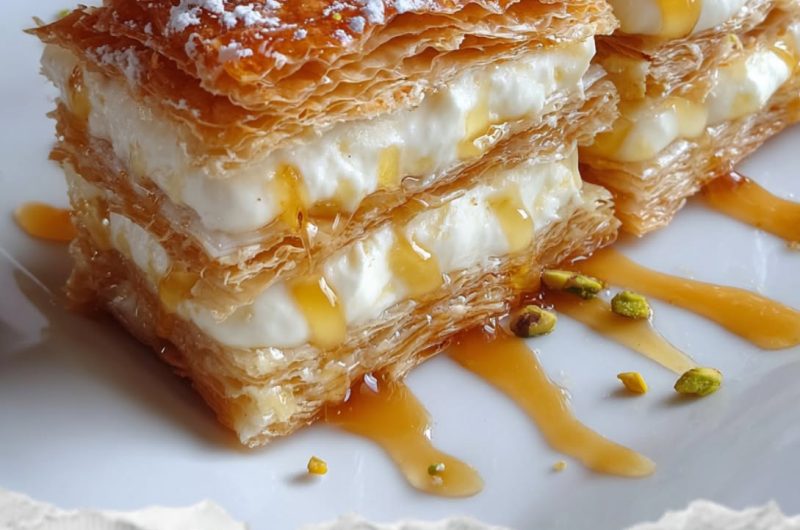
Ashta Mille-Feuille
Course: DessertCuisine: FrenchDifficulty: Medium10
servings30
minutes22
minutes410
kcalCrisp, caramelized puff pastry is layered with cool Lebanese-style ashta scented with orange blossom and rose water. Pistachios, raspberries, and delicate rose petals give this creamy, flaky dessert a beautiful celebratory finish.
Ingredients
- For the Puff Pastry:
2 sheets all-butter puff pastry, thawed according to package directions
2 tbsp powdered sugar, for caramelizing
- For the Ashta Cream:
3⅛ cups whole milk
1 cup heavy cream
⅓ cup granulated sugar
½ cup cornstarch
3 tbsp cold whole milk
1 tsp vanilla extract
1 tbsp orange blossom water
1 tsp rose water
1 oz mascarpone cheese, optional
- For the Garnish:
Chopped roasted pistachios, as needed
Powdered sugar, as needed
Dried edible rose petals, as needed
Fresh raspberries, as needed
Fresh mint leaves, as needed
Directions
- Heat the oven to 400°F / 200°C and prepare the pastry. Line baking sheets with parchment paper, arrange the puff pastry on top, prick the surface thoroughly with a fork, and dust lightly with powdered sugar.
- Weight and bake the pastry. Cover the pastry with another sheet of parchment if needed, then place a second baking sheet securely on top. Bake for 18 to 22 minutes, then remove it from the oven and cool completely.
- Make the cornstarch slurry. Whisk the cornstarch with the 3 tbsp cold milk until completely smooth and free of dry pockets.
- Heat the dairy mixture. Combine the remaining whole milk, heavy cream, and granulated sugar in a heavy-bottomed saucepan. Warm over medium heat until steaming, but do not allow it to boil aggressively.
- Thicken the ashta. Whisk the cornstarch slurry once more, then gradually whisk it into the hot dairy. Continue cooking and stirring until the mixture becomes thick and smooth.
- Flavor the cream. Remove the saucepan from the heat and stir in the vanilla, orange blossom water, rose water, and optional mascarpone until evenly incorporated.
- Chill completely. Transfer the ashta to a container and allow the initial heat to dissipate. Cover and refrigerate until thoroughly cold and firm enough to spread.
- Prepare three pastry panels. Once completely cool, carefully portion the baked pastry into three similarly sized layers appropriate for your serving platter.
- Build the mille-feuille. Place the first pastry panel on the platter and spread with half of the chilled ashta. Add a second pastry panel, spread with the remaining ashta, and finish with the third pastry layer.
- Chill the assembled dessert. Refrigerate for about 2 hours so the cream firms and the layers settle.
- Garnish immediately before serving. Dust with powdered sugar and finish with roasted pistachios, dried rose petals, raspberries, and fresh mint.
- Slice gently and serve chilled. Use a serrated knife with light sawing motions rather than pressing straight down through the delicate pastry.