Patates Plaki is the kind of simple Mediterranean dish that shows just how satisfying potatoes can be when they’re given time to cook slowly in a flavorful sauce. Waxy potato wedges soak up crushed tomatoes, garlic, onion, oregano, thyme, and plenty of extra virgin olive oil, becoming tender and almost creamy while keeping their shape.
The cooking method is wonderfully hands-off. The potatoes first bake covered, which traps moisture and gives the broth and tomato mixture time to penetrate them. Once the foil comes off, the excess liquid gradually evaporates, leaving behind a thicker, richer tomato sauce and lightly caramelized potato edges.
What I especially appreciate about this collected recipe is that it doesn’t rely on complicated techniques or specialty equipment. Most of the work happens in one baking dish, and the ingredients are familiar enough for an everyday dinner while still producing those unmistakably Mediterranean aromas of oregano, tomato, garlic, lemon, and olive oil.
I like serving these potatoes when I want something more substantial than ordinary roasted potatoes but don’t want another fussy dish competing for attention in the kitchen. They’re comforting straight from the oven, yet the parsley and lemon keep everything tasting fresh rather than heavy.
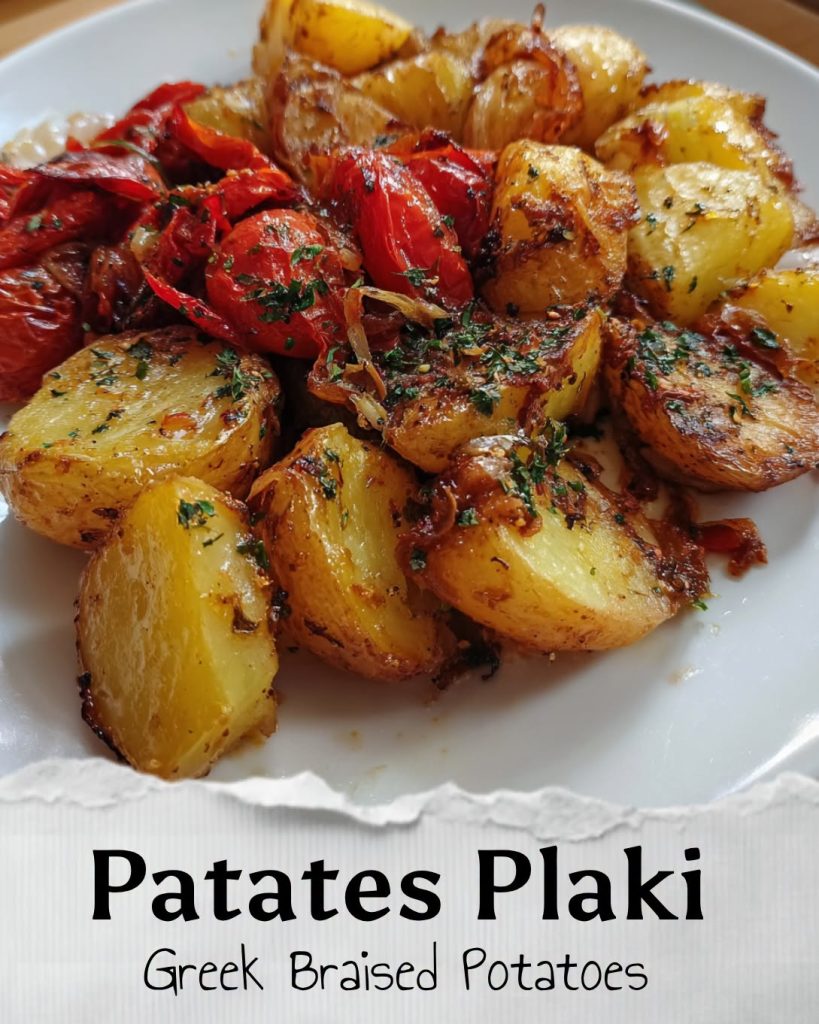
Love this recipe? Pin it to your Mediterranean recipes board on Pinterest so you don’t lose it!
Why You’ll Love This Recipe
- Tender, Saucy Potatoes: Covered baking allows the wedges to gently braise in tomato and broth before uncovered baking concentrates the sauce.
- Classic Mediterranean Flavors: Garlic, oregano, thyme, olive oil, tomato, parsley, and lemon create a savory, herbaceous combination without requiring complicated seasoning.
- Mostly Hands-Off: Once everything is assembled in the baking dish, the oven handles most of the cooking.
- Naturally Plant-Based: The recipe uses vegetable broth and contains no meat or dairy, making it naturally vegan.
- Excellent for Sharing: A large baking dish produces about six generous side-dish portions, making it practical for family dinners and casual gatherings.
Key Ingredients & Why
- Waxy Potatoes: Yukon Gold or another waxy variety holds together better during the long braise than very floury potatoes. Their moderate starch content also gives the centers a creamy texture without causing the wedges to completely disintegrate.
- Extra Virgin Olive Oil: The generous amount of olive oil carries the flavors of the garlic and dried herbs while giving the finished tomato sauce richness and body. It also helps exposed potato surfaces brown once the foil is removed.
- Crushed Tomatoes: Tomatoes provide both moisture and acidity while forming the foundation of the braising sauce. As uncovered baking evaporates water, their flavor becomes more concentrated.
- Tomato Paste: A small amount strengthens the tomato flavor without requiring significantly more liquid. Its concentrated natural sugars and solids also contribute to the deeper flavor of the reduced sauce.
- Greek Oregano: Dried oregano is particularly useful during a long braise because its aromatic compounds disperse through the warm oil and sauce. It provides the distinctly herbal Mediterranean character expected here.
- Fresh Lemon Juice: Lemon is added after cooking rather than during the long braise. Its fresh acidity cuts through the richness of the olive oil and concentrated tomato sauce while preserving a brighter citrus flavor.
Variations & Substitutions
- Different Waxy Potatoes: Substitute red potatoes or another firm, waxy potato for Yukon Gold potatoes at a 1:1 ratio by weight. Keep the wedges similar in size so they finish cooking at approximately the same time.
- Fresh Thyme: Replace 1 tsp dried thyme with 1 tbsp fresh thyme leaves. Add the fresh thyme with the other seasonings before baking.
- Fresh Oregano: If dried Greek oregano isn’t available, substitute approximately 2 tbsp finely chopped fresh oregano for the 2 tsp dried oregano. The flavor will be fresher and somewhat less concentrated.
- Lower-Sodium Version: Use unsalted vegetable broth at a 1:1 ratio for regular vegetable broth. Season the finished potatoes to taste rather than substantially reducing the tomato, herbs, or lemon that give the dish its character.
Equipment Needed
- 9-by-13-inch Baking Dish: A large baking dish gives approximately 2.6 lb of potato wedges enough room to braise evenly while still remaining partially surrounded by sauce. A similarly sized oven-safe casserole can be used instead.
- Heavy-Duty Aluminum Foil: A tight foil covering traps steam during the first stage of cooking. Make sure the foil seals around the edges of the baking dish rather than resting loosely on top.
- Heatproof Spatula or Wide Serving Spoon: Use a broad utensil when turning the partially cooked wedges so they can be lifted without breaking.
Yield & Exact Sizing
- Total Yield: Approximately 6 servings, or roughly 2 to 2½ lb of cooked potatoes with tomato sauce after normal moisture loss during baking.
- Size & Shape: Cut the potatoes into approximately 24 to 30 wedges, depending on potato size. Aim for wedges about ¾ to 1 inch (2 to 2.5 cm) thick at their widest point so they cook through without falling apart.
- Cooking Shrinkage: The potatoes themselves shrink only moderately, but the overall volume decreases as water evaporates from the tomatoes and broth. Expect the initially loose braising liquid to reduce into a substantially thicker sauce.
Ingredients
For the Braised Potatoes:
2.6 lb Yukon Gold or waxy potatoes, peeled and cut into wedges
⅓ cup extra virgin olive oil
1 large onion, thinly sliced
4 garlic cloves, minced
1¾ cups crushed tomatoes
2 tbsp tomato paste
1½ cups vegetable broth
2 tsp dried Greek oregano
1 tsp dried thyme
1 bay leaf
1 tsp sea salt
½ tsp freshly ground black pepper
2 tbsp fresh parsley, chopped
1 tbsp fresh lemon juice, approximately ½ lemon
For the Garnish:
Fresh parsley, chopped
Fresh oregano leaves
Extra virgin olive oil
Lemon wedges
Instructions
- Heat the oven to 375°F / 190°C and build the braising sauce. Add the sliced onion, garlic, crushed tomatoes, tomato paste, vegetable broth, olive oil, oregano, thyme, bay leaf, salt, and black pepper to a 9-by-13-inch baking dish. Stir thoroughly so the tomato paste is evenly incorporated.
- Nestle the potato wedges into the tomato mixture. Arrange them as evenly as possible throughout the baking dish, then gently turn the wedges until their surfaces are coated with the seasoned sauce.
- Cover the dish tightly and braise for 45 minutes. Seal the baking dish with foil before transferring it to the oven so the trapped steam can help cook the potatoes evenly.
- Uncover and carefully turn the potatoes. Remove the foil, gently lift and turn the wedges, and spoon some of the tomato mixture over any exposed surfaces.
- Continue baking uncovered for 25 to 30 minutes. Allow the potatoes to finish cooking while the excess liquid evaporates and the sauce concentrates around them.
- Remove the bay leaf and brighten the finished dish. Drizzle the lemon juice over the hot potatoes, then scatter the chopped fresh parsley across the top.
- Garnish and serve warm. Finish with fresh oregano leaves, a light drizzle of extra virgin olive oil, and lemon wedges for squeezing at the table.
Visual & Tactile Cues
- Before Braising: The sauce should look relatively loose and fluid. The tomato paste should be fully dispersed rather than sitting in dark-red clumps.
- After the Covered Bake: A thin knife or fork should enter the potatoes with some resistance, but the wedges may not yet be completely tender. There should still be noticeable liquid surrounding them.
- During Uncovered Baking: The sauce should visibly reduce and cling more closely to the potatoes. Exposed edges will gradually deepen in color rather than remaining pale.
- When Fully Cooked: A fork should slide easily through the thickest part of a wedge without making it collapse. The centers should feel soft and creamy, while some exposed edges should be golden and lightly caramelized.
- Before Serving: The tomato sauce should be concentrated enough to coat the potatoes rather than pooling like broth at the bottom of the baking dish. Lemon and fresh parsley should add a noticeably brighter aroma once they hit the hot potatoes.
Cooking Notes (Pro Tips)
- Keep the Wedges Consistent: Cut the potatoes about ¾ to 1 inch thick at their widest point. Uneven wedges can leave smaller pieces breaking apart before larger ones become tender.
- Seal the Dish Well: The first 45 minutes are a true braising stage. A tight foil seal traps steam and helps the potatoes cook through before the sauce begins its final reduction.
- Turn Gently: Partially cooked Yukon Gold potatoes become delicate. Slide a wide spatula underneath the wedges rather than stirring aggressively, which can break them and make the sauce overly starchy.
- Let the Sauce Reduce: If the potatoes are tender but the sauce still looks watery after the suggested cooking time, leave the dish uncovered for another 5 to 10 minutes. The goal is a concentrated tomato sauce that coats the potatoes rather than a soupy liquid.
Storage & Reheating Guide
- Refrigerator: Cool leftovers promptly, transfer them to an airtight container, and refrigerate for up to 4 days. Store the potatoes with their tomato sauce so they remain moist.
- Freezer: Freeze cooled portions with some sauce in freezer-safe containers for up to 2 months. The potatoes may become slightly softer after thawing, so freezing is useful for preserving leftovers but will not give quite the same texture as freshly baked potatoes.
- Oven Reheating: For the best overall texture, place the potatoes and sauce in a covered baking dish and warm at 350°F / 175°C until heated through, uncovering for the final few minutes if the sauce needs to reduce.
- Stovetop Reheating: Warm smaller portions gently in a covered skillet or saucepan over medium-low heat. Add 1 to 2 tbsp vegetable broth or water only if the sauce has become too thick.
- Microwave: The microwave is convenient for individual portions, but it produces softer potato edges. Reheat in short intervals and avoid overheating, which can make the potatoes increasingly fragile.
Serving Suggestions
Patates Plaki works beautifully as part of a relaxed Mediterranean family dinner, especially when paired with something fresh, crisp, or protein-rich to balance the tender potatoes and olive oil-rich tomato sauce.
- Greek Village Salad: Tomatoes, cucumber, red onion, olives, and a bright vinaigrette provide cool crunch and acidity alongside the warm, saucy potatoes. It can be assembled while the potatoes are in the oven.
- Grilled Chicken or Fish: Simply seasoned grilled chicken, shrimp, or fish adds protein without competing with the oregano, tomato, garlic, and lemon flavors. Using the grill or stovetop also keeps the oven free for the potatoes.
- Warm Pita and Tzatziki: Pita is ideal for scooping up the concentrated tomato and olive oil sauce, while cool, tangy tzatziki provides contrast. For a fully plant-based meal, use a dairy-free cucumber dip instead.
- Lemony Greens: Quickly sautéed spinach, Swiss chard, or other leafy greens with lemon make a practical stovetop side. Their slight bitterness and acidity balance the richness of the olive oil and potatoes.
Nutrition Facts
Estimated Nutrition per Serving
- Calories: 315 kcal
- Fat: 13 g
- Carb: 46 g
- Protein: 6 g
Disclaimer: This nutritional information is an estimate provided by an online calculator and is meant for informational purposes only.
Recipe Science
Patates Plaki combines potatoes with a tomato-based braising liquid containing vegetable broth, olive oil, onion, garlic, and Mediterranean herbs. The potatoes initially cook in a covered environment before the dish is uncovered to finish. This two-stage technique combines moist-heat cooking with evaporation and surface browning.
Waxy or medium-starch potatoes are particularly suitable because they soften while generally retaining their wedge shape. During covered cooking, heat and moisture gelatinize potato starches and soften cell structures. Olive oil carries fat-soluble aromatic compounds from oregano, thyme, garlic, and onion, while tomato paste contributes concentrated tomato solids. Removing the foil increases evaporation, concentrating the tomato mixture and allowing exposed potato surfaces to dry enough for some browning.
The technique is practical because the sauce and potatoes cook together in one baking dish with relatively little active attention. Leftovers should be cooled and refrigerated promptly in a covered container, preferably with the sauce to limit moisture loss. Gentle reheating is preferable because already-softened potato structures become more susceptible to breaking apart with repeated stirring or prolonged heating.
Per serving, this recipe is relatively low in saturated fat because most of its fat comes from olive oil. Added sugar is also minimal when unsweetened crushed tomatoes, tomato paste, and vegetable broth are used. Sodium varies substantially by broth and canned tomato brand. Compared with the FDA Daily Value of 2,300 mg sodium, choosing lower-sodium broth and tomatoes can help keep a serving below the 20% Daily Value threshold of 460 mg. The FDA Daily Values for saturated fat and added sugar are 20 g and 50 g, respectively.
Frequently Asked Questions
- Do I need to boil the potatoes before baking? No. The covered braising stage provides enough moisture for properly sized potato wedges to cook directly in the tomato and vegetable broth mixture.
- Why hasn’t my tomato sauce thickened? Tomatoes and baking dishes vary in water content and evaporation rate. Once the potatoes are tender, continue baking uncovered for several additional minutes if necessary to concentrate excess liquid.
- Can I leave the potato skins on? Yes, provided you scrub the potatoes thoroughly. Yukon Gold skins are relatively thin, although leaving them on gives the finished dish a slightly more rustic texture than the peeled version.
- What if I cannot find Yukon Gold potatoes outside the United States? Choose a firm, waxy or all-purpose potato that is commonly recommended locally for roasting, boiling, or gratins. Avoid extremely floury varieties if possible because they are more likely to break apart during the long braise.
- Is Patates Plaki served as a main dish or side dish? This version works naturally as either a substantial vegetable side or a simple plant-based meal accompanied by salad, bread, and other Mediterranean dishes.
- Should I serve the potatoes immediately from the oven? They can rest briefly before serving. A short rest allows the concentrated sauce to settle around the wedges, while the final lemon, parsley, and olive oil keep the dish tasting fresh.
Conclusion
There is something wonderfully comforting about turning everyday potatoes, tomatoes, herbs, and olive oil into a dish with this much character. Recipes like this are also a good reminder that cooking is a journey, so don’t be afraid to adjust the final lemon, herbs, or seasoning until the potatoes taste just right at your table.
What would you serve alongside your Patates Plaki for the perfect Mediterranean dinner? Happy cooking, friend!
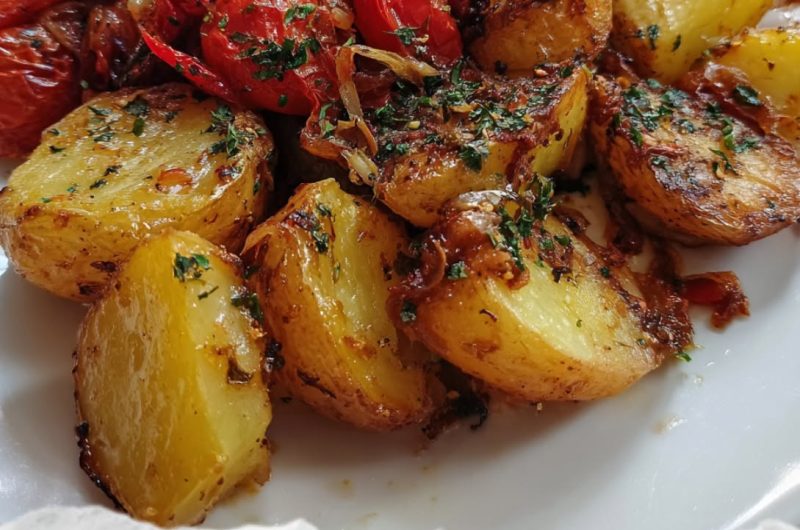
Patates Plaki (Greek Braised Potatoes)
Course: Side DishCuisine: GreekDifficulty: Easy6
servings15
minutes1
hour15
minutes315
kcalTender potato wedges slowly braise in a savory tomato, garlic, olive oil, and herb sauce until creamy inside and lightly caramelized around the edges. A squeeze of fresh lemon and parsley gives this comforting Greek-style dish a bright, fresh finish.
Ingredients
- For the Braised Potatoes:
2.6 lb Yukon Gold or waxy potatoes, peeled and cut into wedges
⅓ cup extra virgin olive oil
1 large onion, thinly sliced
4 garlic cloves, minced
1¾ cups crushed tomatoes
2 tbsp tomato paste
1½ cups vegetable broth
2 tsp dried Greek oregano
1 tsp dried thyme
1 bay leaf
1 tsp sea salt
½ tsp freshly ground black pepper
2 tbsp fresh parsley, chopped
1 tbsp fresh lemon juice, approximately ½ lemon
- For the Garnish:
Fresh parsley, chopped
Fresh oregano leaves
Extra virgin olive oil
Lemon wedges
Directions
- Heat the oven to 375°F / 190°C and build the braising sauce. Add the sliced onion, garlic, crushed tomatoes, tomato paste, vegetable broth, olive oil, oregano, thyme, bay leaf, salt, and black pepper to a 9-by-13-inch baking dish. Stir thoroughly so the tomato paste is evenly incorporated.
- Nestle the potato wedges into the tomato mixture. Arrange them as evenly as possible throughout the baking dish, then gently turn the wedges until their surfaces are coated with the seasoned sauce.
- Cover the dish tightly and braise for 45 minutes. Seal the baking dish with foil before transferring it to the oven so the trapped steam can help cook the potatoes evenly.
- Uncover and carefully turn the potatoes. Remove the foil, gently lift and turn the wedges, and spoon some of the tomato mixture over any exposed surfaces.
- Continue baking uncovered for 25 to 30 minutes. Allow the potatoes to finish cooking while the excess liquid evaporates and the sauce concentrates around them.
- Remove the bay leaf and brighten the finished dish. Drizzle the lemon juice over the hot potatoes, then scatter the chopped fresh parsley across the top.
- Garnish and serve warm. Finish with fresh oregano leaves, a light drizzle of extra virgin olive oil, and lemon wedges for squeezing at the table.