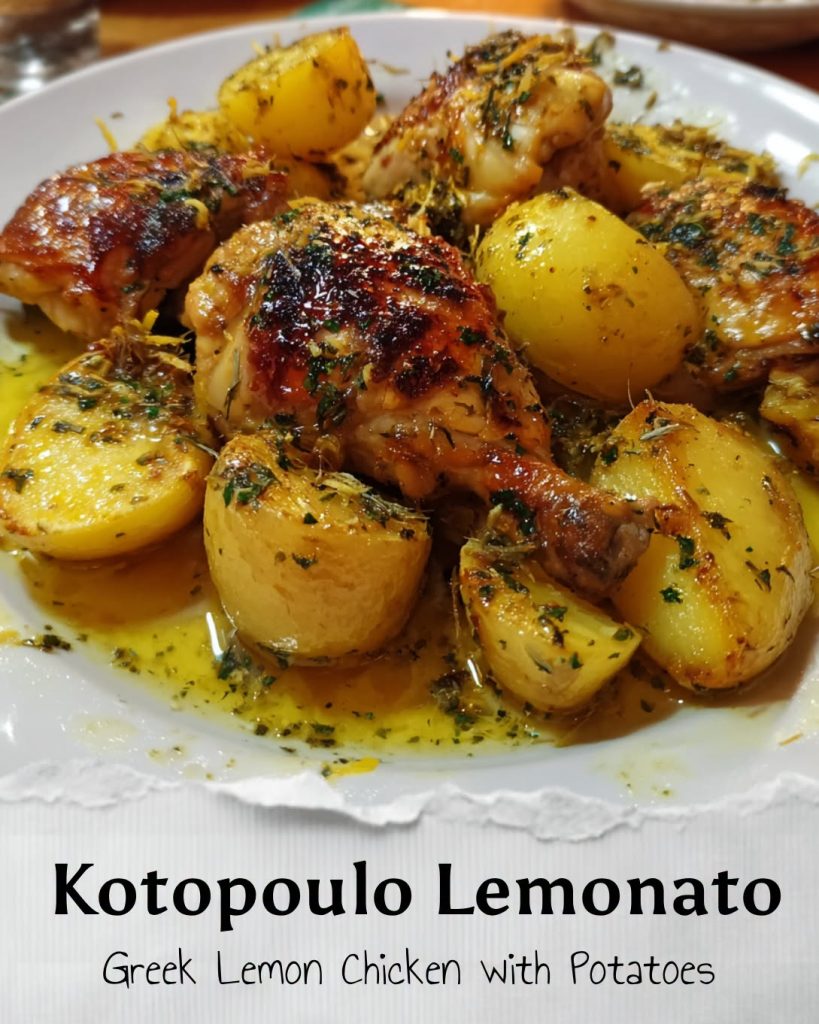
Kotopoulo lemonato is the kind of dinner that reminds me why simple ingredients can be so satisfying. Chicken, potatoes, lemon, garlic, oregano, and good olive oil go into one roasting pan and come out tasting far more complex than the ingredient list suggests, with bright citrus, savory roasted garlic, and unmistakably Greek oregano in every bite.
The chicken roasts directly over the potatoes, so its flavorful juices mingle with the lemony broth below. Meanwhile, the potatoes absorb that liquid as they cook, becoming creamy and deeply seasoned inside while developing browned, slightly crisp edges. The aroma of oregano, garlic, and lemon filling the kitchen is nearly as good as the finished dinner.
I especially appreciate this collected recipe on weekends when I want something that feels generous enough for a family dinner without spending the afternoon at the stove. Marinating requires a little advance planning, but the actual hands-on work is straightforward, and most of the cooking happens unattended in the oven.
Give the chicken its full resting time before serving, and make sure everyone gets some of those concentrated pan juices spooned over the potatoes. Love this recipe? Pin it to your Greek Dinner board on Pinterest so you don’t lose it!
Why You’ll Love This Recipe
- Big Flavor From Familiar Ingredients: Lemon, garlic, oregano, thyme, and olive oil create a bold marinade without requiring a complicated ingredient list.
- Chicken and Potatoes in One Pan: The potatoes cook beneath the chicken and benefit from its savory roasting juices.
- Excellent Texture Contrast: Proper roasting produces juicy chicken, golden skin, creamy potato centers, and browned edges.
- Family-Dinner Friendly: Six substantial portions make this an easy choice for Sunday dinner or a relaxed gathering.
- Mostly Hands-Off Cooking: Once the pan goes into the oven, only one turn is needed before the final roast.
Key Ingredients & Why
- Fresh Lemon Juice and Zest: Lemon juice provides the dish’s defining acidity, while zest contributes aromatic citrus oils without adding more liquid. Together, they keep the rich chicken and olive oil tasting bright.
- Extra-Virgin Olive Oil: Olive oil carries the fat-soluble aromas of oregano, thyme, garlic, and lemon zest while encouraging surface browning.
- Greek Oregano: Dried oregano provides the earthy, slightly peppery herbal character central to the dish. Rubbing it briefly between your fingers before adding it helps release its aromatic compounds.
- Waxy Potatoes: Yukon Gold and similar potatoes hold their shape better than very floury potatoes while still developing creamy interiors. Their starch also helps give the reduced pan juices body.
- Bone-In, Skin-On Chicken: The bones moderate heat during roasting, while rendered skin fat contributes flavor to the potatoes and encourages a golden exterior.
- Chicken Broth: Broth provides enough moisture for the potatoes to become tender before the liquid reduces and concentrates into a savory pan sauce.
Variations & Substitutions
- All Chicken Thighs: Replace mixed bone-in chicken pieces with bone-in, skin-on thighs at a 1:1 weight ratio. Choose similarly sized pieces so they finish cooking together.
- Different Waxy Potatoes: Substitute red, yellow, or other waxy potatoes for Yukon Gold potatoes at a 1:1 weight ratio. Avoid cutting them too small because they cook for more than an hour.
- Low-Sodium Broth: Replace regular chicken broth with low-sodium chicken broth 1:1. This preserves the cooking method while giving you more control over seasoning.
- Fresh Thyme: Replace 1 tsp dried thyme with 1 tbsp fresh thyme leaves. Keep the dried Greek oregano because it contributes an important traditional flavor.
- Extra Lemon Finish: For a sharper citrus profile, squeeze additional fresh lemon over the finished chicken to taste rather than increasing the marinade, which could make the roasting liquid unnecessarily acidic.
Equipment Needed
- Large roasting pan: Use approximately a 12-by-16-inch pan with enough room to spread the potatoes without crowding. A large, rimmed metal baking dish is a suitable alternative.
- Large mixing bowl: It should comfortably hold about 4 lb of chicken while leaving enough room to turn the pieces through the marinade.
- Instant-read meat thermometer: This is the safest, most reliable way to determine when the chicken is cooked. Insert it into the thickest portion without touching bone.
- Broiler-safe roasting pan, optional: Use only if finishing the chicken under the broiler. Do not broil in a dish that the manufacturer does not specifically identify as broiler-safe.
Yield & Exact Sizing
- Total Yield: About 6 generous servings, using 6 large bone-in chicken thighs, or an equivalent 4 lb of chicken cut into serving pieces, plus approximately 2 lb 10 oz potatoes.
- Size & Shape: Cut the potatoes into approximately 1-inch / 2.5-cm-thick wedges, generally 3 to 4 inches / 7.5 to 10 cm long depending on the potato. Aim for about 24 to 30 wedges so they cook evenly.
- Chicken Portions: When using thighs, plan on 1 large bone-in thigh per serving. If using a cut-up chicken, portion size will vary according to the pieces.
- Cooking Shrinkage: The chicken will lose moisture and rendered fat during roasting, while the potatoes will soften and shrink slightly around their edges. Expect the finished food to occupy noticeably less volume than the raw ingredients.
Ingredients
For the Chicken Marinade:
⅓ cup plus 1 tbsp extra-virgin olive oil
Juice of 3 lemons
Zest of 1 lemon
6 garlic cloves, minced
2 tsp dried Greek oregano
1 tsp dried thyme
1 tsp sea salt
½ tsp freshly ground black pepper
4 lb bone-in, skin-on chicken pieces, or 6 large bone-in, skin-on chicken thighs
For the Potatoes and Roasting:
2 lb 10 oz Yukon Gold or waxy potatoes, peeled and cut into thick wedges
1½ cups chicken broth
For Garnish:
Fresh parsley, chopped
Lemon wedges
Dried Greek oregano
Instructions
- Whisk the marinade together. Combine the olive oil, lemon juice, lemon zest, garlic, oregano, thyme, salt, and black pepper in a large bowl.
- Marinate the chicken. Add the chicken and turn each piece until thoroughly coated. Cover and refrigerate for at least 1 hour, or overnight for a more developed flavor.
- Preheat the oven to 400°F / 200°C. Arrange the potato wedges across the bottom of a large roasting pan in a relatively even layer.
- Build the roasting pan. Set the marinated chicken over the potatoes. Pour any marinade remaining in the bowl over everything, then add the chicken broth and turn the potatoes gently to coat.
- Roast for 45 minutes. Keep the pan uncovered so moisture can gradually evaporate and the chicken can begin browning.
- Turn the chicken and potatoes carefully. Return the pan to the oven and roast for another 30 to 35 minutes, or until the chicken is cooked through and the potatoes are tender.
- Broil briefly for crisper skin, if desired. Place a broiler-safe pan under the broiler for 3 to 5 minutes, watching continuously to prevent the garlic, herbs, or skin from burning.
- Rest the chicken for 10 minutes. Leave it in the pan or transfer it to a warm platter while the juices settle.
- Garnish and serve. Arrange the chicken and potatoes on a platter, spoon over the reduced pan juices, and finish with parsley, lemon wedges, and a light sprinkle of oregano.
Visual & Tactile Cues
- After Marinating: The chicken should look glossy and evenly coated, with visible flecks of oregano, thyme, garlic, and lemon zest clinging to its surface.
- Halfway Through Roasting: The skin should have begun taking on color, but the pan should still contain a noticeable amount of lemony cooking liquid. The potato surfaces will be softening rather than fully crisp.
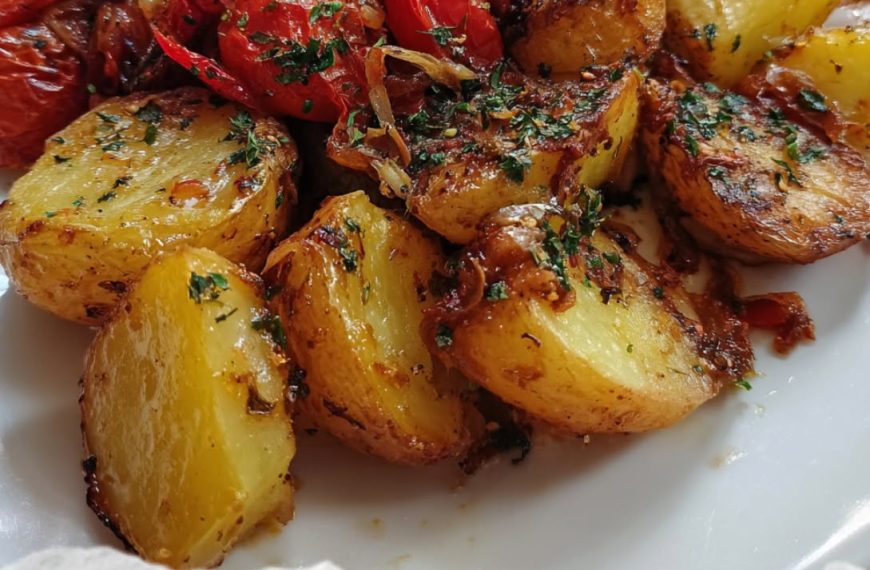
- Potato Doneness: A fork or thin skewer should slide easily into the center of a wedge. The edges should show golden-brown patches, while the interiors remain soft and creamy.
- Chicken Doneness: The skin should be deeply golden and the juices should run clear. For food safety, verify that the thickest part reaches at least 165°F / 74°C, without touching the bone with the thermometer.
- Finished Pan Sauce: Most of the thin broth should have evaporated, leaving a smaller quantity of glossy, concentrated juices around the chicken and potatoes.
- During Broiling: Listen for active sizzling and watch the skin constantly. Browning happens quickly at this stage.
Cooking Notes (Pro Tips)
- Give the Pan Enough Space: Overcrowding traps steam. Use a roasting pan large enough for the potatoes to sit mostly in one layer beneath and around the chicken.
- Keep the Potato Wedges Substantial: Small wedges can become overly soft during the long chicken roasting time. Thick wedges withstand the extended cooking period much better.
- Watch the Garlic Under the Broiler: Minced garlic can go from browned to bitter quickly. Broiling is optional, and the pan should never be left unattended.
- Use Temperature, Not Color Alone: Bone-in chicken can appear beautifully browned before its thickest sections are fully cooked. Confirm doneness with a thermometer.
Storage & Reheating Guide
- Refrigerator: Cool leftovers promptly and refrigerate in airtight containers for up to 3 to 4 days. Store some pan juices with the chicken to help protect it from drying out.
- Freezer: Freeze cooked chicken for up to 3 months for best quality. The potatoes can also be frozen, although their texture will be softer after thawing.
- Oven Reheating: Arrange chicken and potatoes in a baking dish with a spoonful of reserved juices. Cover loosely at first and warm at 350°F / 175°C until hot, then uncover briefly to restore surface browning.
- Air Fryer: Reheat individual chicken pieces and potato wedges at about 350°F / 175°C until thoroughly heated and crisp at the edges. Avoid overcrowding.
- Microwave: It works when convenience matters, but the chicken skin and potato edges will become soft rather than crisp. The oven or air fryer produces a texture closer to the freshly roasted dish.
Serving Suggestions
This is especially well suited to a relaxed Sunday dinner or family-style gathering, where the roasting pan can be the centerpiece and the accompaniments stay simple.
- Greek Village Salad: Tomatoes, cucumber, red onion, olives, and feta provide cool crunch and fresh acidity against the rich roasted chicken.
- Tzatziki: A small bowl of cool yogurt, cucumber, and garlic sauce gives each plate a creamy counterpoint without requiring additional oven space.
- Warm Pita Bread: Heat pita briefly just before serving and use it to catch the concentrated lemony juices left on the plate.
- Fresh Fruit or Greek Yogurt With Honey: A simple, cool dessert keeps the meal balanced and avoids competing for oven space while the chicken cooks.
Nutrition Facts
Estimated Nutrition per Serving
- Calories: 730 kcal
- Fat: 43 g
- Carb: 39 g
- Protein: 48 g
Disclaimer: This nutritional information is an estimate provided by an online calculator and is meant for informational purposes only.
Recipe Science
Kotopoulo lemonato combines bone-in chicken, potatoes, olive oil, lemon, garlic, herbs, and broth in a relatively hot roasting environment. The method simultaneously roasts the chicken while allowing the potatoes to cook in seasoned liquid and rendered chicken juices. As roasting continues, evaporation reduces that liquid and concentrates its flavor.
Chicken skin contains fat that renders under heat, while its exposed surface undergoes browning as moisture evaporates. Olive oil helps distribute aromatic compounds from oregano, thyme, garlic, and lemon zest across the food. The potato starches absorb water and soften during cooking, while surfaces exposed to stronger dry heat can brown. Lemon juice contributes acidity, while lemon zest supplies aromatic oils without substantially increasing moisture.
The one-pan method is practical because the chicken and potatoes share both cooking time and seasoning. Thick potato wedges are particularly suitable because they can withstand the relatively long roasting period required by bone-in chicken. After cooking, prompt refrigeration limits the time leftovers spend at room temperature, while reheating with retained pan juices helps compensate for moisture lost during the second heating.
A precise sodium and saturated-fat comparison with FDA Daily Values depends on the chicken pieces and chicken broth selected, and those values are not specified in the source recipe. The FDA Daily Values are 2,300 mg sodium, 20 g saturated fat, and 50 g added sugar. The recipe contains no intentionally added sugar, but skin-on chicken and olive oil contribute fat, and broth and added salt contribute sodium. Choosing lower-sodium broth or reducing added salt can lower sodium while preserving the core lemon, garlic, and oregano profile.
Frequently Asked Questions
- Can I skip the one-hour marinade? The source recipe specifically calls for at least 1 hour of marinating, with overnight marinating suggested for deeper flavor, so plan for that resting period when possible.
- Do I need to peel Yukon Gold potatoes? The collected recipe calls for peeled potatoes. Leaving thin, clean skins on would change the original preparation but should not prevent the potatoes from roasting successfully.
- Why is there still liquid in my pan near the end? Pan dimensions, chicken moisture, and oven performance affect evaporation. Continue roasting until the chicken is safely cooked, and allow the juices to reduce rather than expecting the pan to become completely dry.
- What can I use outside the US if Yukon Gold potatoes aren’t available? Choose a yellow-fleshed, waxy or all-purpose potato that holds its shape during roasting. Varieties sold for roasting or boiling are generally a better match than very floury baking potatoes.
- Is Greek oregano essential? It contributes an important part of the dish’s characteristic flavor. If Greek oregano is available where you live, it is worth using rather than replacing it with an unrelated herb blend.
- Can I use boneless chicken breasts instead? The supplied recipe is designed around bone-in, skin-on chicken and its long roasting time. Boneless breasts would require substantial timing changes and would not produce the same rendered fat or roasting juices.
Conclusion
There is something wonderfully comforting about bringing a pan of golden chicken, creamy potatoes, and fragrant lemon-garlic juices to the family table. Cooking is always a journey, so once you know the method, make the little finishing touches your own.
What do you love serving alongside Greek lemon chicken? Happy cooking, friend!
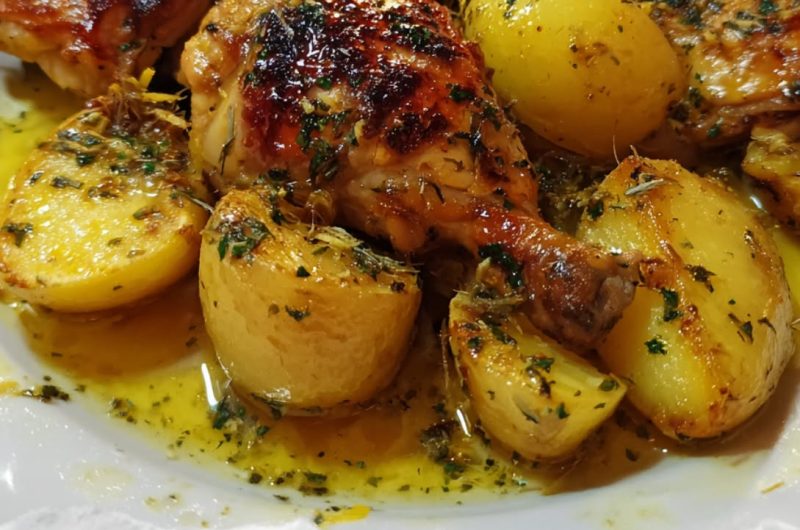
Kotopoulo Lemonato (Greek Lemon Chicken with Potatoes)
Course: DinnerCuisine: GreekDifficulty: Easy6
servings20
minutes1
hour20
minutes730
kcalBone-in chicken and thick potato wedges roast together in a bright lemon, garlic, oregano, and olive oil marinade until the chicken is golden and the potatoes are tender with crisp edges. The pan juices reduce into a savory, citrusy sauce that ties everything together.
Ingredients
- For the Chicken Marinade:
⅓ cup plus 1 tbsp extra-virgin olive oil
Juice of 3 lemons
Zest of 1 lemon
6 garlic cloves, minced
2 tsp dried Greek oregano
1 tsp dried thyme
1 tsp sea salt
½ tsp freshly ground black pepper
4 lb bone-in, skin-on chicken pieces, or 6 large bone-in, skin-on chicken thighs
- For the Potatoes and Roasting:
2 lb 10 oz Yukon Gold or waxy potatoes, peeled and cut into thick wedges
1½ cups chicken broth
- For Garnish:
Fresh parsley, chopped
Lemon wedges
Dried Greek oregano
Directions
- Whisk the marinade together. Combine the olive oil, lemon juice, lemon zest, garlic, oregano, thyme, salt, and black pepper in a large bowl.
- Marinate the chicken. Add the chicken and turn each piece until thoroughly coated. Cover and refrigerate for at least 1 hour, or overnight for a more developed flavor.
- Preheat the oven to 400°F / 200°C. Arrange the potato wedges across the bottom of a large roasting pan in a relatively even layer.
- Build the roasting pan. Set the marinated chicken over the potatoes. Pour any marinade remaining in the bowl over everything, then add the chicken broth and turn the potatoes gently to coat.
- Roast for 45 minutes. Keep the pan uncovered so moisture can gradually evaporate and the chicken can begin browning.
- Turn the chicken and potatoes carefully. Return the pan to the oven and roast for another 30 to 35 minutes, or until the chicken is cooked through and the potatoes are tender.
- Broil briefly for crisper skin, if desired. Place a broiler-safe pan under the broiler for 3 to 5 minutes, watching continuously to prevent the garlic, herbs, or skin from burning.
- Rest the chicken for 10 minutes. Leave it in the pan or transfer it to a warm platter while the juices settle.
- Garnish and serve. Arrange the chicken and potatoes on a platter, spoon over the reduced pan juices, and finish with parsley, lemon wedges, and a light sprinkle of oregano.