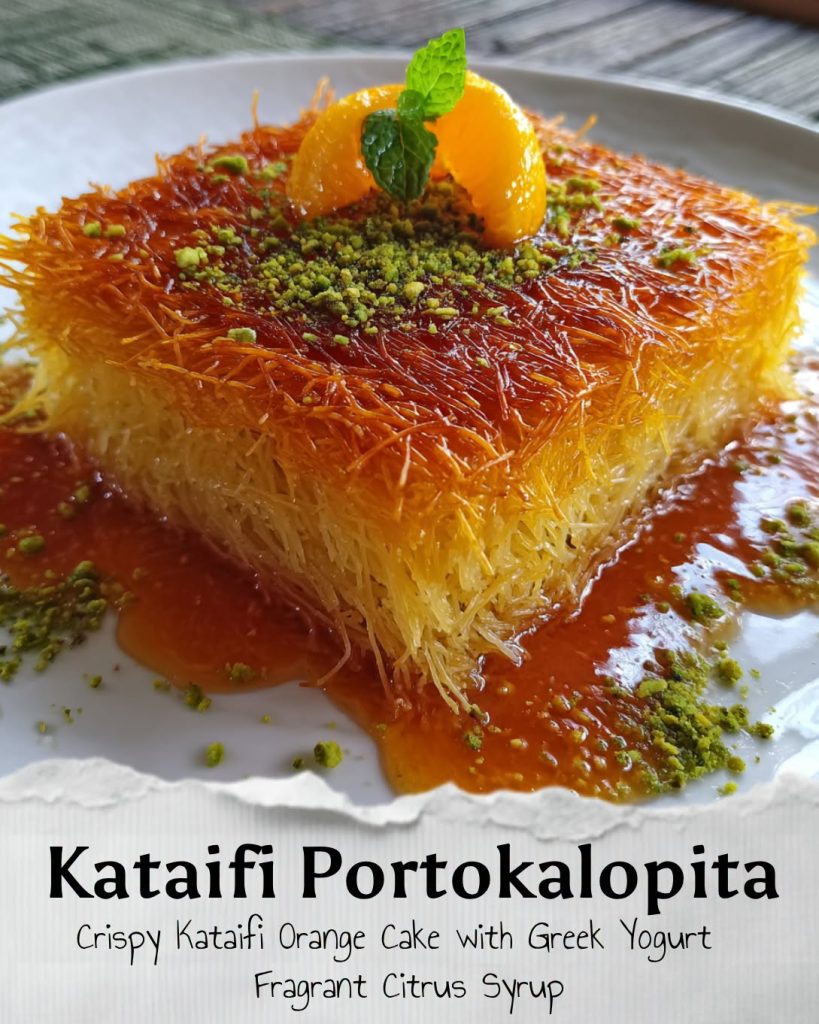
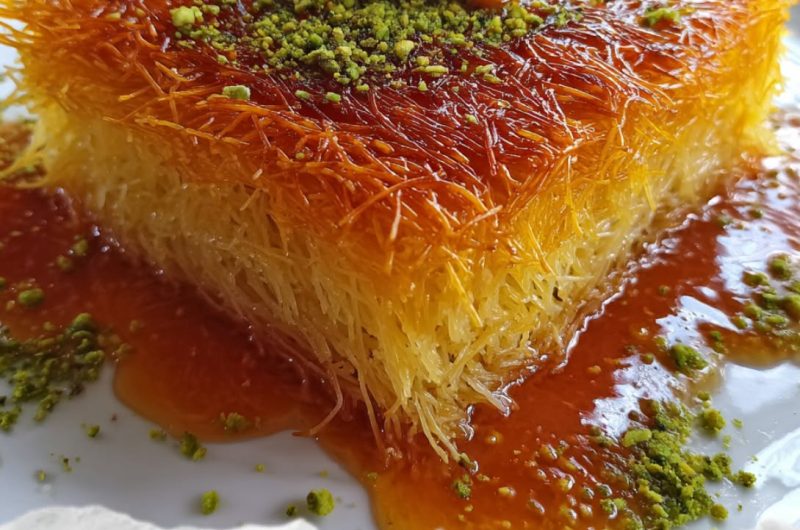
Kataifi Portokalopita takes the familiar flavors of Greek orange syrup cake and gives them an especially interesting texture with shredded kataifi pastry. Instead of behaving like a conventional flour cake, the dried pastry strands absorb the yogurt-and-orange batter while retaining enough definition to create a tender, textured center and beautifully golden top.
The orange comes through in layers. Fresh zest perfumes the batter, juice adds brightness, and the finished cake receives a generous orange syrup scented with cinnamon and a touch of lemon. Greek yogurt contributes gentle tang, which is particularly welcome against the sweetness of the syrup.
The most important technique is also wonderfully simple: let the kataifi dry before cutting it into manageable pieces. The separated, slightly dried strands incorporate into the batter more evenly and are better prepared to absorb the citrus mixture without collapsing into a heavy mass.
I especially like this kind of collected recipe for gatherings because it can rest before serving. There is no frantic last-minute frosting or decorating, and the hour spent absorbing syrup actually improves the finished dessert. A little pistachio and fresh zest on top make even simple squares look special.
If you love fragrant Mediterranean desserts, save this one to your dessert board on Pinterest so you can find it when orange season comes around again!
Why You’ll Love This Recipe
- Wonderful Texture: Kataifi gives the cake more character than an ordinary sponge, with delicate pastry strands throughout and a golden, lightly crisp surface.
- Big Citrus Flavor: Orange zest and juice appear in both the cake and syrup, so the orange tastes fresh and unmistakable rather than merely sweet.
- Make-Ahead Friendly: The cake needs time to absorb its syrup, making it naturally suited to preparing before guests arrive.
- No Frosting Required: Pistachios, orange zest, mint, and an optional dusting of powdered sugar are all the decoration it needs.
- Simple Syrup Technique: Pouring completely cooled syrup over the freshly baked hot cake encourages controlled absorption while preserving more texture.
Key Ingredients & Why
- Kataifi Pastry: These fine shredded phyllo strands replace the conventional flour-based structure. Drying and cutting them first helps distribute them evenly and allows the batter and syrup to penetrate between the strands.
- Greek Yogurt: Yogurt supplies moisture, acidity, and dairy richness. Its tang also balances the substantial amount of sugar required for this traditional syrup-soaked style of dessert.
- Fresh Orange Zest: The peel contains aromatic citrus oils that deliver a much stronger orange fragrance than juice alone. Zesting directly before mixing preserves those volatile aromas.
- Sunflower Oil: A neutral oil keeps the crumb moist without competing with orange and cinnamon. Unlike butter, it remains fluid at room temperature, helping the chilled or rested cake stay tender.
- Eggs: Eggs bind the yogurt mixture to the kataifi while supplying proteins that set during baking and give the cake enough structure to accept the syrup.
- Lemon Juice: A small amount sharpens the orange syrup’s sweetness. Its acidity also helps balance what would otherwise be a very sugar-forward finish.
Variations & Substitutions
- Neutral Oil Swap: Replace sunflower oil 1:1 with canola, grapeseed, or another mild neutral oil. Avoid strongly flavored oils that could overwhelm the orange.
- Mandarin Accent: Replace up to ½ of the orange juice 1:1 with fresh mandarin or tangerine juice while retaining the orange zest for the characteristic flavor.
- Vanilla Paste: Substitute vanilla bean paste for vanilla extract 1:1 for a slightly rounder vanilla aroma.
- Cardamom-Citrus Variation: Add ¼ tsp ground cardamom to the batter without changing the cinnamon in the syrup. Keep the quantity restrained so orange remains the dominant flavor.
- Nut-Free Garnish: Omit the pistachios rather than replacing them in the batter. The nuts are decorative, so removing them does not affect the cake’s structure.
Equipment Needed
- 9 x 13-inch baking dish: Provides the correct surface area and cake depth for even baking. A similarly sized oven-safe baking pan is suitable, but a substantially smaller dish may leave the center underbaked.
- Large mixing bowl: It needs enough room to fold in the kataifi without compressing the delicate strands.
- Medium saucepan: Use one large enough for the syrup to simmer without bubbling over.
- Kitchen scissors: The easiest way to cut dried kataifi strands into short pieces. Clean culinary shears work equally well.
- Fine citrus zester: Removes the aromatic outer orange peel without excessive bitter white pith (a fine Microplane-style grater works well).
Yield & Exact Sizing
- Total Yield: One 9 x 13-inch cake, cut into 12 generous servings.
- Size & Shape: For 12 portions, cut into approximately 3 x 3¼-inch rectangles. For a dessert buffet, the cake can instead be divided into 15 smaller pieces.
- Cake Depth: Expect roughly a 1½ to 2-inch-thick finished cake, depending on the baking dish.
- Cooking Shrinkage: The cake may settle slightly as it cools and absorbs the syrup. This is expected and does not indicate underbaking.
Ingredients
For the Cake:
12⅓ oz kataifi pastry, separated, dried, and cut into short pieces
1 cup Greek yogurt
¾ cup plus 2 tbsp granulated sugar
⅔ cup sunflower oil
4 large eggs
2 tsp baking powder
2 tbsp finely grated orange zest, from about 2 large oranges
¼ cup fresh orange juice, from about 1 orange
1 tsp vanilla extract
⅛ tsp sea salt
For the Orange Syrup:
1¾ cups granulated sugar
1⅔ cups water
½ cup fresh orange juice, from about 2 oranges
3 wide strips orange peel, from about 1 orange
1 cinnamon stick
1 tsp fresh lemon juice
For Garnish:
¼ cup chopped pistachios
1 tsp finely grated fresh orange zest
Powdered sugar, optional
Fresh mint leaves
Instructions
- Dry and prepare the kataifi pastry. Gently pull apart the strands with your fingertips and spread them loosely on a clean tray. Leave uncovered at room temperature for 1 to 2 hours, then use kitchen scissors to snip the strands into short pieces.
- Cook the orange syrup. Add the granulated sugar, water, orange juice, orange peel, and cinnamon stick to a medium saucepan. Bring to a gentle boil, reduce the heat, and simmer for 8 to 10 minutes.
- Cool the syrup completely. Remove the saucepan from the heat and stir in the lemon juice. Remove the cinnamon stick and orange peel, then set the syrup aside until completely cool.
- Heat the oven and prepare the pan. Preheat the oven to 350°F / 180°C. Lightly grease a 9 x 13-inch baking dish.
- Whisk the wet batter. Combine the Greek yogurt, granulated sugar, sunflower oil, eggs, orange zest, orange juice, vanilla extract, baking powder, and sea salt in a large bowl. Whisk until evenly blended.
- Fold in the kataifi. Add the chopped pastry gradually, folding after each addition so the strands become thoroughly coated without being compressed. Let the mixture stand for 10 minutes.
- Bake until deeply golden. Transfer the mixture to the prepared baking dish and spread it into an even layer. Bake for 45 to 50 minutes.
- Soak the hot cake with cold syrup. As soon as the cake comes out of the oven, slowly ladle or pour the completely cooled orange syrup across the entire surface. Work gradually so every section receives an even amount.
- Rest before cutting. Leave the cake undisturbed for at least 1 hour so the pastry can absorb the syrup and the interior can settle.
- Garnish and serve. Cut the cake into squares, rectangles, or diamonds. Finish with chopped pistachios, fresh orange zest, optional powdered sugar, and mint leaves, then serve at room temperature.
Visual & Tactile Cues
- Preparing the Kataifi: Fresh kataifi strands may initially feel soft and slightly pliable. After drying, they should feel noticeably lighter and less damp, separating readily rather than clumping together.
- Mixing the Batter: The yogurt mixture should look smooth and glossy before the kataifi goes in. Once folded together, every pastry strand should appear moistened, with no large dry nests remaining.
- After the 10-Minute Rest: The mixture will become slightly thicker as the pastry begins absorbing moisture. It should still spread easily rather than forming a stiff mass.
- During Baking: Look for a deep golden surface and browned strands around the edges. The center should feel set when gently pressed rather than wet or loose.
- Adding the Syrup: The hot cake may softly hiss as the cool syrup reaches it. Add the liquid slowly enough that it disappears into the cake rather than immediately pooling around the edges.
- After Resting: Most or all visible syrup should have been absorbed. The cake should feel moist and substantial inside while retaining some texture across its golden surface.
Cooking Notes (Pro Tips)
- Dry the Kataifi Properly: Do not skip the drying period. Excessively moist, tightly packed strands are harder to distribute and can produce dense patches in the cake.
- Separate Before Cutting: Fluff the kataifi first, then cut it. Cutting a compressed bundle encourages tangled clumps that are difficult to coat evenly.
- Respect the Temperature Contrast: Have the syrup completely cool before the cake finishes baking. The intended method is cool syrup over a hot, freshly baked cake.
- Pour Gradually: Do not dump all the syrup into one spot. Slow, even application gives the entire cake a more consistent texture and prevents localized sogginess.
Storage & Reheating Guide
- Refrigerator: Once completely cool, cover the cake tightly and refrigerate for up to 4 days. Let individual portions sit at room temperature for about 20 minutes before serving for the best aroma and texture.
- Freezer: Freeze individual, fully cooled portions in airtight containers for up to 2 months. Thaw overnight in the refrigerator. The pastry will generally be softer after freezing.
- Oven Reheating: If you prefer it slightly warm, heat a portion at 300°F / 150°C for about 8 to 10 minutes. Avoid prolonged heating, which can dry the syrup-soaked edges.
- Microwave Warning: Microwaving is convenient but softens the kataifi quickly. For the best textural contrast, use the oven or simply serve the cake at room temperature.
Serving Suggestions
This fragrant cake feels especially at home after a Greek-inspired family dinner, at a holiday dessert table, or alongside afternoon coffee.
- Strong Greek Coffee: Its concentrated, slightly bitter character balances the sweet orange syrup beautifully, and it requires no additional oven space.
- Unsweetened Greek Yogurt: A small spoonful alongside each serving provides cool acidity and creaminess without adding more sweetness.
- Fresh Orange Segments: Chilled orange adds juicy freshness and reinforces the cake’s citrus character while providing a lighter contrast to the syrup-soaked pastry.
- Black Tea with Mint: A simple hot tea refreshes the palate between bites, while mint complements the optional fresh mint garnish.
Nutrition Facts
Estimated Nutrition per Serving
- Calories: 435 kcal
- Fat: 15 g
- Carb: 71 g
- Protein: 6 g
Disclaimer: This nutritional information is an estimate provided by an online calculator and is meant for informational purposes only.
Recipe Science
Kataifi Portokalopita combines shredded phyllo-style kataifi pastry with eggs, Greek yogurt, oil, sugar, and fresh citrus before baking the mixture as a single cake. Unlike a conventional cake built primarily around flour, its structure comes largely from pastry strands supported by coagulated egg proteins. A cooked orange-and-cinnamon syrup supplies additional sweetness, moisture, and aroma after baking.
Drying and separating the kataifi increases the amount of exposed pastry surface and reduces clumping, allowing the yogurt mixture to coat the strands more uniformly. During baking, egg proteins set, moisture evaporates from the surface, and browning creates the golden exterior. Oil limits dryness, while yogurt contributes water, fat, protein, and acidity. Applying cool syrup to the hot cake creates a strong temperature and moisture gradient that encourages the liquid to move through spaces between the pastry strands.
The technique is practical for entertaining because syrup absorption happens during the required resting period rather than through additional hands-on work. The cake is also naturally suited to advance preparation. Airtight storage is important because exposed cut surfaces gradually lose moisture in the refrigerator, while freezing can preserve the cake longer but may soften its distinctive pastry texture after thawing.
A 12-serving batch contains a substantial quantity of granulated sugar, with an estimated added-sugar contribution per serving that exceeds 20% of the FDA Daily Value of 50 grams. Saturated fat and sodium are expected to remain below 20% of their respective Daily Values of 20 grams and 2,300 milligrams per serving, although exact values depend on the kataifi and yogurt used. For a less sweet presentation without changing the cake’s baking structure, serving slightly smaller portions is the most reliable adjustment; aggressively reducing the syrup would change the characteristic moisture and texture of this dessert.
Frequently Asked Questions
- What exactly is kataifi pastry? Kataifi is very fine shredded pastry dough related to phyllo. Rather than arriving in flat sheets, it consists of long, threadlike strands that become crisp when baked.
- Can I prepare the syrup the day before? Yes. Make it ahead, remove the aromatics as directed, cool it, and refrigerate it in a covered container. The syrup should be cool when applied to the freshly baked cake.
- Why isn’t this cake fluffy like a traditional orange sponge? Kataifi provides a different structure from flour. Expect a moist, substantial, textured interior with recognizable fine pastry strands rather than a light, airy crumb.
- Can I use bottled orange juice? Fresh juice is preferable because the recipe depends heavily on fresh citrus aroma. If bottled juice is your only option, choose 100% orange juice without added sweeteners, but still use freshly grated orange zest.
- What can readers outside the US look for when buying kataifi? Check Greek, Turkish, Middle Eastern, Balkan, or Mediterranean grocers for products labeled kataifi, kadaif, kadayif, or shredded phyllo pastry. Frozen kataifi is common, and it should be thawed according to the package directions before separating and drying.
- Should the cake be served hot or cold? Room temperature is ideal. It allows the orange and cinnamon aromas to come through clearly while keeping the syrup-soaked interior tender.
Conclusion
This Kataifi Portokalopita is one of those desserts that rewards a little patience with bright citrus fragrance, a syrupy center, and the distinctive texture of golden kataifi. Cooking is always a journey, so enjoy the process, learn how the pastry behaves in your kitchen, and make the presentation your own.
Would you finish your slice with pistachios, fresh mint, or an extra shower of orange zest? Happy cooking, friend!
Kataifi Portokalopita
Course: DessertCuisine: GreekDifficulty: Easy12
servings30
minutes50
minutes435
kcalCrisp strands of kataifi pastry are folded into a bright orange and Greek yogurt batter, baked until deeply golden, then soaked with fragrant cinnamon-orange syrup. The result is tender and custardy inside, with pleasantly textured pastry strands and intense citrus flavor.
Ingredients
- For the Cake:
12⅓ oz kataifi pastry, separated, dried, and cut into short pieces
1 cup Greek yogurt
¾ cup plus 2 tbsp granulated sugar
⅔ cup sunflower oil
4 large eggs
2 tsp baking powder
2 tbsp finely grated orange zest, from about 2 large oranges
¼ cup fresh orange juice, from about 1 orange
1 tsp vanilla extract
⅛ tsp sea salt
- For the Orange Syrup:
1¾ cups granulated sugar
1⅔ cups water
½ cup fresh orange juice, from about 2 oranges
3 wide strips orange peel, from about 1 orange
1 cinnamon stick
1 tsp fresh lemon juice
- For Garnish:
¼ cup chopped pistachios
1 tsp finely grated fresh orange zest
Powdered sugar, optional
Fresh mint leaves
Directions
- Dry and prepare the kataifi pastry. Gently pull apart the strands with your fingertips and spread them loosely on a clean tray. Leave uncovered at room temperature for 1 to 2 hours, then use kitchen scissors to snip the strands into short pieces.
- Cook the orange syrup. Add the granulated sugar, water, orange juice, orange peel, and cinnamon stick to a medium saucepan. Bring to a gentle boil, reduce the heat, and simmer for 8 to 10 minutes.
- Cool the syrup completely. Remove the saucepan from the heat and stir in the lemon juice. Remove the cinnamon stick and orange peel, then set the syrup aside until completely cool.
- Heat the oven and prepare the pan. Preheat the oven to 350°F / 180°C. Lightly grease a 9 x 13-inch baking dish.
- Whisk the wet batter. Combine the Greek yogurt, granulated sugar, sunflower oil, eggs, orange zest, orange juice, vanilla extract, baking powder, and sea salt in a large bowl. Whisk until evenly blended.
- Fold in the kataifi. Add the chopped pastry gradually, folding after each addition so the strands become thoroughly coated without being compressed. Let the mixture stand for 10 minutes.
- Bake until deeply golden. Transfer the mixture to the prepared baking dish and spread it into an even layer. Bake for 45 to 50 minutes.
- Soak the hot cake with cold syrup. As soon as the cake comes out of the oven, slowly ladle or pour the completely cooled orange syrup across the entire surface. Work gradually so every section receives an even amount.
- Rest before cutting. Leave the cake undisturbed for at least 1 hour so the pastry can absorb the syrup and the interior can settle.
- Garnish and serve. Cut the cake into squares, rectangles, or diamonds. Finish with chopped pistachios, fresh orange zest, optional powdered sugar, and mint leaves, then serve at room temperature.