These spanakopita scrolls take the familiar spinach-and-feta flavors of Greek spinach pie and turn them into individual spirals. Each one has a crisp, deeply golden phyllo shell wrapped around a soft, savory filling of spinach, salty feta, creamy ricotta, onion, and plenty of fresh herbs.
Dill, parsley, mint, oregano, and a small amount of nutmeg give the filling much more dimension than spinach and cheese alone. The contrast is what makes these especially satisfying: shatteringly thin pastry outside, creamy and herbaceous filling inside.
The most important part of the recipe is moisture control. Spinach holds an astonishing amount of water, so squeezing the cooked mixture thoroughly helps the phyllo remain crisp instead of becoming damp around the filling. Keeping the unused phyllo covered while you assemble the scrolls also makes the process considerably easier.
I especially like this collected recipe for a gathering because the individual coils already look finished and inviting when they come out of the oven. There is no pie to slice at the table, and the scrolls are equally enjoyable warm or at room temperature, which takes some pressure off entertaining.
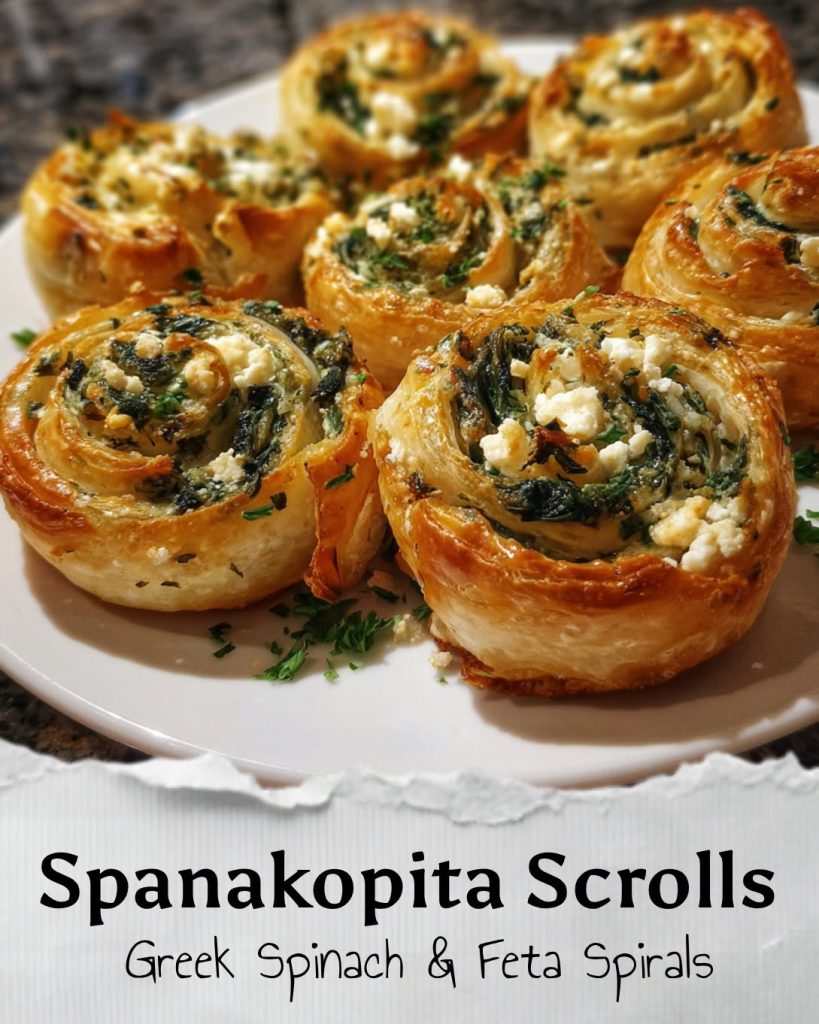
If you enjoy spinach pie but want something a little more special for the serving platter, these golden spirals are well worth the extra few minutes of shaping. Love this recipe? Pin it to your appetizer board on Pinterest so you don’t lose it!
Why You’ll Love This Recipe
- Wonderful Texture Contrast: Thin layers of buttered phyllo become crisp and flaky while protecting the tender spinach-and-cheese center.
- Herb-Packed Filling: Dill, parsley, mint, and oregano give the spinach filling a distinctly Mediterranean character without making it heavy.
- Made for Entertaining: Eight individual spirals are easy to arrange, serve, and share without cutting a large pie.
- Good Warm or at Room Temperature: You do not have to time serving to the exact minute they leave the oven.
- Vegetarian and Satisfying: Feta, ricotta, eggs, and spinach make these substantial enough for a generous appetizer or light meal.
Key Ingredients & Why
- Phyllo Pastry: Its extremely thin sheets contain very little fat on their own. Brushing fat between layers separates them during baking, producing the characteristic crisp, flaky structure.
- Spinach: Spinach provides the bulk of the filling, but cooking concentrates its flavor and removes some water. Thorough draining is critical because excess moisture softens phyllo.
- Greek Feta: Feta supplies acidity, saltiness, and a pleasantly crumbly texture that balances the milder spinach and ricotta.
- Ricotta: Ricotta softens the sharper feta and creates a creamier filling without completely eliminating the feta’s texture.
- Eggs: Eggs bind the cheese, spinach, and herbs as their proteins set in the oven, helping the filling stay inside each spiral.
- Fresh Dill and Mint: These aromatic herbs brighten the rich cheese and butter. Dill is particularly important to the recognizable spinach-and-feta flavor profile.
Variations & Substitutions
- Olive Oil Phyllo: Replace the melted butter 1:1 by volume with extra virgin olive oil, as allowed in the original recipe. Brush lightly so the pastry is coated rather than saturated.
- All-Feta Filling: For a sharper, more traditional feta-forward profile, replace the ricotta 1:1 by weight with additional feta. Expect a saltier, firmer filling, and reduce added salt to taste.
- Baby Spinach: Substitute baby spinach 1:1 by weight for mature fresh spinach. It wilts particularly quickly, so shorten the skillet time accordingly.
- Black Sesame Alternative: If nigella seeds are unavailable, simply omit them rather than replacing them with a strongly flavored seed. The sesame topping still provides plenty of visual and textural contrast.
- Smaller Party Spirals: Divide each prepared phyllo strip and its filling into smaller portions before coiling. Keep the pastry-to-filling proportion consistent, and begin checking smaller scrolls several minutes earlier.
Equipment Needed
- Large skillet: Provides enough surface area to wilt the spinach without overcrowding it.
- Large mixing bowl: Gives you room to combine the drained spinach and cheeses evenly without crushing the mixture.
- Large rimmed baking sheet: Allows space between the spirals so hot air can circulate and crisp their edges.
- Pastry brush: Applies a thin, even coating of butter between fragile phyllo sheets (a clean silicone brush also works).
- Clean kitchen towel: Keep it lightly damp and place it over unused phyllo while working. Do not place a dripping-wet towel directly against the pastry because excess water makes phyllo sticky.
Yield & Exact Sizing
- Total Yield: 8 individual spanakopita scrolls.
- Size & Shape: Aim for approximately 4 to 5-inch (10 to 13-cm) spirals. Coil each filled phyllo log snugly but not so tightly that the pastry tears.
- Cooking Shrinkage: The scrolls should not shrink substantially, although the filling will settle slightly as moisture evaporates and the phyllo becomes crisp.
Ingredients
For the Filling:
1 tbsp extra virgin olive oil
1 small onion, finely chopped
3 spring onions, finely sliced
1.1 lb fresh spinach, chopped
8.8 oz Greek feta cheese, crumbled
5.3 oz ricotta cheese
2 large eggs
3 tbsp fresh dill, finely chopped
2 tbsp fresh parsley, finely chopped
1 tbsp fresh mint, finely chopped
1 tsp dried Greek oregano
¼ tsp freshly grated nutmeg
½ tsp sea salt
½ tsp freshly ground black pepper
For the Pastry:
10 sheets phyllo pastry
¾ cup plus 1 tbsp unsalted butter, melted
For the Topping:
1 large egg, beaten
1 tbsp milk
1 tbsp sesame seeds
1 tsp nigella seeds, optional
For the Garnish:
Fresh dill, as needed
Fresh parsley, as needed
Crumbled feta, as needed
Instructions
- Cook the onions until tender. Heat the olive oil in a large skillet over medium heat. Add the onion and spring onions, and cook for about 4 to 5 minutes.
- Wilt the spinach. Add the chopped spinach in batches if necessary, stirring until it collapses. Remove the skillet from the heat and let the mixture cool enough to handle.
- Remove the excess liquid. Transfer the spinach mixture to a clean towel or fine-mesh strainer and squeeze or press firmly to remove as much moisture as practical.
- Mix the filling. Combine the drained spinach mixture with feta, ricotta, eggs, dill, parsley, mint, oregano, nutmeg, salt, and black pepper. Stir until evenly distributed.
- Prepare the oven and pan. Heat the oven to 350°F / 180°C and line a large baking sheet with parchment paper.
- Layer the phyllo. Set one phyllo sheet on a clean work surface and lightly brush it with melted butter. Cover with a second sheet and brush the surface again. Keep the remaining pastry covered while you work.
- Fill and roll the pastry. Arrange a narrow strip of spinach filling along one long edge of the layered phyllo. Roll it into a long, relatively snug log without crushing the pastry.
- Shape the spiral. Gently wind the filled log into a coil and transfer it to the prepared baking sheet. Repeat with the remaining phyllo and filling to make 8 scrolls, portioning the pastry as needed to achieve the stated yield.
- Add the topping. Whisk the beaten egg with the milk. Brush the exposed pastry lightly, then scatter sesame seeds and optional nigella seeds over the scrolls.
- Bake until crisp and golden. Bake for 35 to 40 minutes. Remove the scrolls from the oven and leave them on the pan for 10 minutes before serving.
- Garnish and serve. Transfer the scrolls to a platter and finish with fresh dill, parsley, and a little crumbled feta. Serve warm or at room temperature.
Visual & Tactile Cues
- Spinach Stage: The spinach should be completely collapsed with no large raw-looking leaves remaining. After squeezing, it should feel damp rather than wet and should not release a stream of liquid when pressed.
- Finished Filling: The mixture should hold together loosely on a spoon. It should not have liquid pooling at the bottom of the bowl.
- Phyllo Assembly: Properly buttered phyllo looks lightly glossy rather than soaked. If it begins cracking excessively while rolling, it has likely dried out.
- Shaping: The filled log should bend into a coil without filling being forced from the ends. Leave the spiral slightly relaxed because an overly tight coil can split.
- Baking: Look for an evenly deep-golden surface, crisp edges, and visibly separated pastry layers. The kitchen should smell distinctly buttery and toasted.
Cooking Notes (Pro Tips)
- Drain Aggressively: Water trapped in the spinach is the biggest threat to crisp pastry. Cool the spinach first, then squeeze thoroughly before combining it with the cheeses.
- Protect the Phyllo: Phyllo dries quickly once exposed to air. Remove only the sheets you are actively using and keep the rest covered.
- Brush, Don’t Drench: More butter does not automatically mean crispier pastry. Heavy application can make the layers greasy instead of delicately flaky.
- Coil Gently: Do not force the filled log into a tight spiral. A slightly loose coil is less likely to tear and gives the phyllo room to crisp.
Storage & Reheating Guide
- Refrigerator: Cool leftovers, transfer them to an airtight container, and refrigerate for up to 3 to 4 days.
- Freezer: Freeze completely cooled baked scrolls until firm, then package airtight for up to 2 months. Thaw overnight in the refrigerator before reheating for the most even result.
- Oven Reheating: Reheat at 350°F / 180°C until hot and crisp, generally about 10 to 15 minutes from refrigerated.
- Air Fryer: Reheat individual refrigerated scrolls at approximately 325°F / 165°C for several minutes, checking frequently because exposed phyllo browns quickly.
- Avoid the Microwave: Microwaving will warm the filling but usually turns crisp phyllo soft and chewy.
Serving Suggestions
These scrolls are particularly well suited to a relaxed lunch, mezze spread, holiday appetizer table, or casual gathering where dishes can be served family-style.
- Greek Village Salad: Tomato, cucumber, olives, and a sharp vinaigrette bring freshness and acidity to the buttery pastry and rich cheese.
- Tzatziki: Cool yogurt, cucumber, garlic, and herbs make a refreshing dipping sauce that can be prepared while the scrolls bake.
- Roasted Red Pepper Dip: Its sweet, tangy flavor complements salty feta while adding color to an appetizer platter. Make it ahead so it does not compete for oven space.
- Lemon-Dressed Greens: A simple salad with lemon and olive oil provides acidity and crunch without adding another rich component to the meal.
Nutrition Facts
Estimated Nutrition per Serving
- Calories: 485 kcal
- Fat: 36 g
- Carb: 27 g
- Protein: 15 g
Disclaimer: This nutritional information is an estimate provided by an online calculator and is meant for informational purposes only.
Recipe Science
Spanakopita scrolls combine a moisture-rich spinach and cheese filling with thin sheets of phyllo pastry. The filling is cooked and drained before assembly, while butter separates the phyllo layers and the assembled spirals are baked with dry oven heat until crisp.
Moisture management largely determines the final texture. Spinach loses considerable water when heated, and removing that liquid reduces migration into the pastry. During baking, water in the phyllo converts to steam while the fat between sheets limits adhesion, helping create distinct flaky layers. Egg proteins in the filling coagulate as they heat, giving the spinach and cheese mixture additional structure.
The individual-scroll format provides substantial exposed pastry surface, promoting browning and crispness while creating convenient portions. Once baked, the scrolls store best under refrigeration after cooling. Reheating with dry circulating heat, rather than microwave energy, helps drive surface moisture away and restores some of the phyllo’s crisp texture.
The recipe contains no meaningful added sugar beyond naturally occurring carbohydrates, so added sugar is unlikely to approach 20% of the FDA Daily Value of 50 g per serving. Feta and butter can make sodium and saturated fat comparatively significant. Depending on the specific feta, butter, ricotta, and phyllo brands used, saturated fat may exceed 20% of the 20 g Daily Value, and sodium may approach or exceed 20% of the 2,300 mg Daily Value. Using less butter for brushing, choosing lower-sodium feta where available, and reducing the added salt can lower these values without changing the basic cooking method.
Frequently Asked Questions
- Why did my phyllo split while I was rolling it? Phyllo becomes brittle rapidly when exposed to air. Work with a few sheets at a time and keep the remaining stack protected while assembling.
- Can I prepare the spinach filling ahead? Yes. Cook, drain, and mix the filling ahead, refrigerate it promptly in a covered container, and keep it chilled until assembly.
- Can I use frozen spinach? The source recipe specifies fresh spinach, so frozen spinach has not been tested in the provided version. If experimenting, it would need to be fully thawed and exceptionally well drained before use.
- What can I use outside the US if I cannot find Greek feta? Look for genuine feta or a brined white cheese with a firm, crumbly texture. Avoid very soft spreadable cheeses because they will change the filling’s moisture and structure.
- Do I need to serve the scrolls immediately? No. The original recipe specifically allows them to be served warm or at room temperature, making them convenient for entertaining.
Conclusion
There is something especially satisfying about pulling a tray of crisp, golden spirals from the oven, and the spinach, feta, and fresh-herb filling makes these just as delicious as they are pretty. Cooking is always a journey, so once you’ve mastered the basic scroll, don’t be afraid to make the presentation your own.
What would you put alongside these spanakopita scrolls for your perfect Greek-inspired spread? Happy cooking, friend!
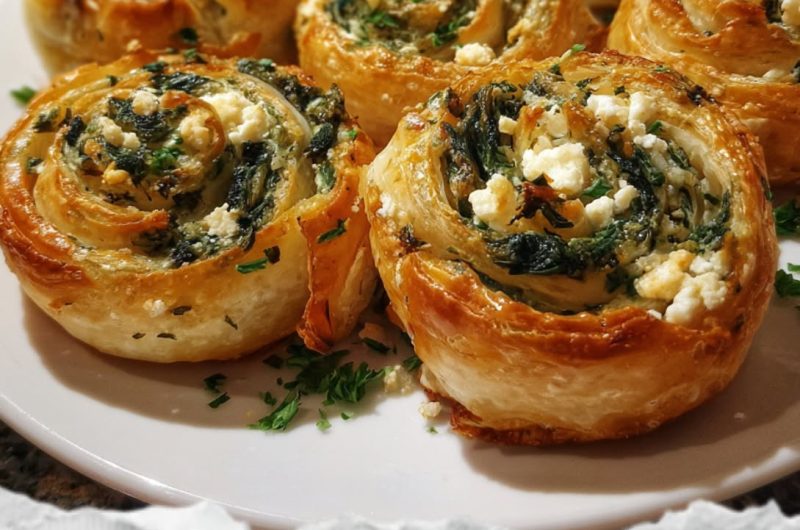
Spanakopita Scrolls (Greek Spinach & Feta Spirals)
Course: AppetizersCuisine: GreekDifficulty: Medium8
scrolls35
minutes40
minutes485
kcalCrisp, buttery phyllo is coiled around a savory spinach, feta, ricotta, and fresh-herb filling. These individual spanakopita-inspired spirals take a little hands-on assembly, but they bake into beautifully flaky portions that are especially good for sharing.
Ingredients
- For the Filling:
1 tbsp extra virgin olive oil
1 small onion, finely chopped
3 spring onions, finely sliced
1.1 lb fresh spinach, chopped
8.8 oz Greek feta cheese, crumbled
5.3 oz ricotta cheese
2 large eggs
3 tbsp fresh dill, finely chopped
2 tbsp fresh parsley, finely chopped
1 tbsp fresh mint, finely chopped
1 tsp dried Greek oregano
¼ tsp freshly grated nutmeg
½ tsp sea salt
½ tsp freshly ground black pepper
- For the Pastry:
10 sheets phyllo pastry
¾ cup plus 1 tbsp unsalted butter, melted
- For the Topping:
1 large egg, beaten
1 tbsp milk
1 tbsp sesame seeds
1 tsp nigella seeds, optional
- For the Garnish:
Fresh dill, as needed
Fresh parsley, as needed
Crumbled feta, as needed
Directions
- Cook the onions until tender. Heat the olive oil in a large skillet over medium heat. Add the onion and spring onions, and cook for about 4 to 5 minutes.
- Wilt the spinach. Add the chopped spinach in batches if necessary, stirring until it collapses. Remove the skillet from the heat and let the mixture cool enough to handle.
- Remove the excess liquid. Transfer the spinach mixture to a clean towel or fine-mesh strainer and squeeze or press firmly to remove as much moisture as practical.
- Mix the filling. Combine the drained spinach mixture with feta, ricotta, eggs, dill, parsley, mint, oregano, nutmeg, salt, and black pepper. Stir until evenly distributed.
- Prepare the oven and pan. Heat the oven to 350°F / 180°C and line a large baking sheet with parchment paper.
- Layer the phyllo. Set one phyllo sheet on a clean work surface and lightly brush it with melted butter. Cover with a second sheet and brush the surface again. Keep the remaining pastry covered while you work.
- Fill and roll the pastry. Arrange a narrow strip of spinach filling along one long edge of the layered phyllo. Roll it into a long, relatively snug log without crushing the pastry.
- Shape the spiral. Gently wind the filled log into a coil and transfer it to the prepared baking sheet. Repeat with the remaining phyllo and filling to make 8 scrolls, portioning the pastry as needed to achieve the stated yield.
- Add the topping. Whisk the beaten egg with the milk. Brush the exposed pastry lightly, then scatter sesame seeds and optional nigella seeds over the scrolls.
- Bake until crisp and golden. Bake for 35 to 40 minutes. Remove the scrolls from the oven and leave them on the pan for 10 minutes before serving.
- Garnish and serve. Transfer the scrolls to a platter and finish with fresh dill, parsley, and a little crumbled feta. Serve warm or at room temperature.